Booming Used Equipment Market – An Alternative Path for Mature Node Capacity Expansion
Booming Used Equipment Market – An Alternative Path for Mature Node Capacity Expansion
As global demand for semiconductors at mature process nodes continues to grow, chipmakers face a strategic question: how to expand capacity without committing to the full cost and lead time of brand‑new fab tooling. In this environment, the used semiconductor equipment market has shifted from a niche corner of the industry into a booming, mainstream alternative. Buying, refurbishing, and redeploying used tools has become a key path for adding mature node capacity quickly and economically, reshaping investment decisions and competitive dynamics across the ecosystem.

This blog post explores why the used equipment market is flourishing, how it supports mature node expansion, what risks and constraints it entails, and how different players—from foundries and IDMs to brokers and refurbishers—are positioning themselves in this evolving landscape.
Why mature nodes still matter
Mature process nodes—often defined loosely as 28 nm and above, and including many older technologies—remain central to a wide range of applications. Automotive microcontrollers, power management ICs, analog front ends, sensors, industrial controllers, and a large portion of connectivity chips are produced at these nodes.
These products prioritize reliability, robustness, and cost over the absolute bleeding edge of performance. Manufacturers and end customers value proven processes with long qualification histories, wide design ecosystems, and predictable behavior in harsh environments.
As electrification of vehicles, industrial automation, and IoT deployments accelerate, mature node demand has not diminished; in many cases, it has increased. This sustained need underpins the appeal of used equipment as a means to expand capacity without re‑architecting entire product families for smaller nodes.
Constraints on new equipment for mature nodes

While new tools can certainly support mature processes, there are practical constraints. Equipment vendors focus significant R&D and production capacity on advanced node tools, where the highest margins and strategic differentiation reside. Mature node tools may not receive the same priority, and some legacy platforms have been discontinued or transitioned to limited support status.
Moreover, ordering brand‑new equipment for mature nodes can be capital intensive relative to the revenue and margin profile of the end products. The economics often favor lower upfront spending and quicker payback periods, especially for capacity expansions aimed at incremental volume rather than new technology introduction.
These constraints create a gap that the used equipment market is well suited to fill: providing compatible tools at lower cost and often shorter lead times than ordering new systems tailored to mature nodes.
What counts as “used” equipment?
Used semiconductor equipment encompasses a wide spectrum, from recently decommissioned tools that operated at mid‑range nodes to older platforms originally installed for now‑legacy processes. It includes lithography scanners, etch systems, deposition tools, diffusion furnaces, test and measurement systems, and various back‑end machines.
Some tools are sold essentially “as is,” while others go through extensive refurbishment and upgrading. Refurbishers may replace wear parts, update control software, add new modules, or even retrofit tools to support slightly newer process requirements.
The diversity of used equipment means that buyers must carefully assess fit for their target processes, but it also provides flexibility: tools can be matched to specific capacity needs and budgets rather than following a one‑size‑fits‑all new purchase approach.
Key drivers of the booming used market

Several factors have converged to make the used equipment market boom. First, the semiconductor industry has undergone significant capacity reallocation: as older fabs modernize or shift focus, they retire tools that can be repurposed elsewhere. These retirements provide a steady supply of used equipment.
Second, strong demand for mature node products has created a buyer base eager for cost‑effective expansion options. Many companies prefer to avoid the long lead times and higher capital costs of new equipment when used tools can do the job reliably.
Third, specialized intermediaries—brokers, refurbishers, and auction platforms—have matured, making it easier to match sellers and buyers, handle logistics, and provide assurance about tool condition. This reduces friction and uncertainty in transactions, encouraging more participants to consider used equipment seriously.
Cost advantages and capital efficiency
The most obvious appeal of used equipment is cost. A refurbished tool typically sells at a significant discount compared with its new equivalent, even after accounting for refurbishment and installation. For capacity expansion at mature nodes, where product ASPs are often lower than at cutting‑edge processes, this cost advantage can be decisive.
Lower acquisition costs translate into shorter payback periods. An investment in used tools can begin contributing to output and revenue relatively quickly, especially if the equipment can be installed and qualified faster than new systems with longer manufacturing queues.
From a capital planning perspective, this allows companies to expand capacity in smaller, more flexible increments, aligning spending more closely with demand trends and reducing the risk of over‑building.
Lead time and deployment speed
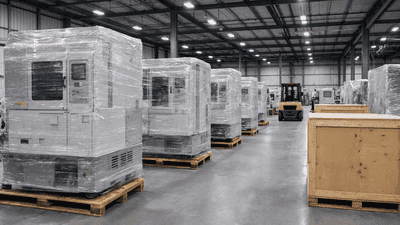
Beyond price, lead time is a critical advantage of the used market. New tools often have lead times stretching many months or longer, particularly in tight supply environments. Used tools, already built and only needing refurbishment and relocation, can frequently be deployed faster.
Refurbishers and brokers play a key role here. By maintaining inventories of tools and parts, and by streamlining refurbishment workflows, they can reduce the time from purchase decision to operational status. For companies facing urgent capacity needs—due to customer commitments, supply shortages, or new project ramps—this speed is invaluable.
Rapid deployment lets mature node producers respond more dynamically to market signals, seizing opportunities and mitigating bottlenecks that might otherwise throttle growth.
Technical suitability for mature processes
Used tools are especially suited to mature nodes because their original design and performance often aligned with those very processes. A scanner or etcher built for 130 nm, 90 nm, or 65 nm work may be perfectly adequate—or easily tunable—for similar or slightly larger geometries that dominate many analog and power applications.
Even when tools were previously used at slightly more advanced nodes, the basic capabilities—resolution, uniformity, process stability—can often support mature processes comfortably. In some cases, older tools can even provide over‑spec performance, giving process engineers extra margin.
By matching used platforms to mature node requirements, companies avoid paying for unnecessary cutting‑edge capabilities while still securing reliable production capacity.
Refurbishment, upgrading, and process tuning
Refurbishment and upgrading are central to making the used equipment model work. Tools removed from service may require mechanical repair, replacement of consumables, calibration, and software updates. Refurbishers specialize in restoring equipment to production‑worthy condition.
Upgrading can extend beyond basic repair. For example, control electronics might be modernized, gas handling systems improved, or safety features updated. In some cases, process enhancement modules are added to broaden the range of usable recipes.
Process tuning at the fab level completes the picture. Engineers adjust recipes to the idiosyncrasies of refurbished tools, ensuring output meets performance and yield targets. Over time, this tuning can make used equipment behave almost indistinguishably from newer platforms in the context of mature processes.
Risks and limitations of used equipment
Despite its advantages, the used equipment path carries risks. Older tools may have higher failure rates, limited spare parts availability, or reduced energy efficiency compared with modern equivalents. Without thorough refurbishment and testing, these issues can lead to downtime and higher maintenance costs.
Another limitation is capability: used tools might not support certain tighter specifications or integration features needed for newer mature processes, especially if those processes incorporate elements initially developed at more advanced nodes. Companies must carefully align tool capabilities with process requirements.
There is also the risk of buying from unreliable sources. Without proper documentation, inspection, and refurbishment, used equipment may arrive in worse condition than advertised. Mitigating this requires working with reputable intermediaries and insisting on transparent testing and certification.
Regulatory and export considerations
The used equipment market intersects with regulatory and export control issues. Some tools or components may be subject to restrictions based on their technical capabilities or origin, even if they are older models. Buyers and sellers must ensure compliance with export regulations and licensing requirements.
Regulatory scrutiny can sometimes complicate cross‑border transactions, requiring extra documentation and time. However, mature node tools often fall into less sensitive categories than cutting‑edge equipment, making certain transactions more straightforward.
Companies participating in the used market need robust compliance processes to avoid inadvertent violations and delays, integrating legal and logistics considerations into their acquisition strategies.
Role of intermediaries: brokers, refurbishers, and aggregators
The booming used equipment market has given rise to an ecosystem of intermediaries. Brokers identify and match supply and demand, helping sellers find buyers and vice versa. Refurbishers handle the technical side: disassembly, repair, testing, and reassembly.
Aggregators may acquire multiple tools from decommissioned fabs, create standardized refurbishment programs, and then offer packages tailored to specific capacity expansion projects. Some intermediaries specialize in particular categories—lithography, etch, diffusion, test—developing deep expertise and reputations.
For buyers, choosing the right partner is crucial. Strong intermediaries improve transparency, reduce risk, and provide technical and logistical support that simplifies the entire process of bringing used equipment into production.
Strategic uses: bridging cycles and testing markets
Beyond straightforward capacity expansion, used equipment offers strategic flexibility. Companies can use it to test new markets or product lines without committing large amounts of capital. If demand proves durable, they can later upgrade to newer tools or build dedicated lines; if not, their sunk cost remains lower.
Used tools also help bridge investment cycles. When mature node demand outpaces initial forecasts, companies can add used equipment quickly while planning longer‑term strategies. Conversely, if demand softens, the lower capital at risk reduces financial strain.
This flexibility is particularly valuable in volatile or emerging markets where forecasting is difficult, allowing mature node producers to respond nimbly to changing conditions.
Competitive implications in mature markets
The availability of used equipment affects competitive dynamics among mature node chipmakers. Companies that can rapidly scale capacity using used tools may gain share and secure key customer relationships. Those slower to act could find themselves facing supply constraints or needing to invest more heavily in new equipment.
At the same time, effective use of used equipment can support more aggressive pricing strategies. Lower capital costs can translate into more competitive bids, especially for commoditized analog and power products where cost leadership is critical.
On the flip side, over‑reliance on aging equipment without adequate refurbishment and maintenance can erode competitiveness if yield, reliability, or energy efficiency suffer. The winners will be those who treat used tools as strategic assets, not quick fixes.
Future outlook: continued growth and professionalization
Looking ahead, the used semiconductor equipment market is likely to remain robust. As newer fabs come online and older ones restructure, the pipeline of tools available for redeployment should stay healthy. Meanwhile, structural demand for mature node capacity—in automotive, industrial, and IoT—appears poised to persist.
The market will likely become more professionalized: better documentation, standardized refurbishment practices, and richer data on tool histories and performance will improve transparency and trust. Digital platforms for listing and tracking equipment may further streamline transactions.
As this happens, used equipment could move from being seen as a secondary option to an integral part of mature node capacity planning, sitting alongside new tool purchases in corporate capex strategies.
Conclusion: an increasingly mainstream path to mature capacity
The booming used equipment market offers an alternative, increasingly mainstream path for expanding mature node semiconductor capacity. By leveraging refurbished and redeployed tools, chipmakers can add output quickly and cost‑effectively, aligning investments with the economic realities of analog, power, and other mature node products.
Success on this path requires careful technical and strategic management—choosing the right tools, partners, and processes—but for many companies, it has become a core element of how they respond to growing demand. In a world where not every problem can or should be solved with the latest node and the newest tool, the used equipment market stands out as a pragmatic, powerful lever for sustaining and expanding the mature node infrastructure that underpins much of modern electronics.