Short-Term Impact Assessment of Japan Earthquakes on Global Equipment Supply Chain
Short-Term Impact Assessment of Japan Earthquakes on Global Equipment Supply Chain
Japan sits at the heart of the global semiconductor equipment ecosystem. It is home to critical tool makers, key sub‑component suppliers, specialty materials vendors, and precision manufacturing firms that support fabs worldwide. When significant earthquakes hit Japan, the immediate concern for the semiconductor industry is not only human safety and local infrastructure damage, but also the short‑term impact on equipment and parts supply. Even relatively brief disruptions in Japanese production or logistics can ripple through global tool delivery schedules, fab ramp plans, and maintenance activities.

This blog post assesses the short‑term impact of Japanese earthquakes on the global semiconductor equipment supply chain. It examines which parts of the chain are most vulnerable, how disruptions typically unfold in the days and weeks following a major quake, what mitigation mechanisms exist, and how fabs and equipment makers respond to stabilize operations. The focus is on the near‑term horizon—weeks to a few months—where immediate actions and contingency plans matter most.
Japan’s role in semiconductor equipment and parts
Japan’s importance in the equipment supply chain stems from several strengths. It hosts leading manufacturers of front‑end tools, including deposition, etch, clean, and metrology systems, as well as key players in back‑end and packaging equipment. Japanese firms supply critical components such as vacuum pumps, valves, ceramic parts, advanced optics, precision motion systems, and control electronics.
Beyond hardware, Japan is a major source of high‑purity gases, photoresists, wafers, polishing materials, and other consumables that tools rely on to function. Many global tool makers integrate Japanese parts into their systems, and fabs around the world depend directly on Japanese spare parts and consumables for ongoing production.
This deep integration means that earthquakes affecting Japanese industrial regions can influence the availability and timing of a wide range of equipment‑related items, from complete tools to the smallest precision components.
Immediate effects: plant shutdowns, safety checks, and damage assessment

In the immediate aftermath of a major earthquake, Japanese equipment and component manufacturers typically suspend operations to ensure employee safety and assess damage. Production lines may halt, power and utilities can be disrupted, and access to facilities might be limited due to infrastructure or transportation issues.
Safety checks focus on building integrity, tool alignment, and the condition of sensitive manufacturing equipment such as precision machining centers, cleanroom environments, and test systems. Any misalignment or contamination must be addressed before production resumes. In some cases, relatively minor physical damage can still require significant time to repair because equipment must be recalibrated and requalified.
These immediate shutdowns and assessments create short‑term pauses in output, particularly for highly specialized parts where alternative production sites are limited.
Logistics disruptions: ports, roads, and global shipping
Earthquakes also affect logistics. Damage to ports, roads, and rail lines can slow or temporarily block outbound shipments from affected regions. Even if production resumes quickly, moving equipment and parts out of Japan may be delayed by reduced capacity at key transport hubs and constraints on trucking or rail services.
Shipping schedules can be disrupted, with vessels rerouted or delayed, and freight capacity reprioritized for emergency and essential goods. Air freight may see increased demand for urgent shipments, but capacity and cost limits apply. These logistical bottlenecks can extend the impact of earthquakes beyond the immediate production pauses.
For the global equipment supply chain, such disruptions translate into delays in tool deliveries, spare part shipments, and consumable replenishments, particularly for customers relying on just‑in‑time logistics.
Critical components and single‑source vulnerabilities
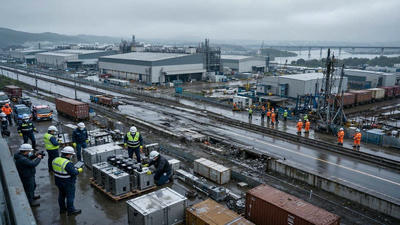
Short‑term risk is highest where the supply chain depends on single or highly concentrated sources. Certain precision components—specialized ceramics, unique vacuum pumps, optical elements, or proprietary control modules—may have only one or a few qualified suppliers, some of which are located in Japanese regions prone to earthquakes.
When such facilities are damaged or shut down, alternate sources may not be able to meet demand quickly, either because they lack capacity or because qualifying them for use in existing tools takes time. This can delay the assembly of new equipment or the repair of installed tools, particularly in advanced process nodes where qualification standards are strict.
Identifying and managing these single‑source vulnerabilities is a central part of short‑term impact assessment, as they often determine whether disruptions remain minor or escalate into broader bottlenecks.
Impact on new tool installations and fab ramps
New fab projects and capacity expansions rely on timely delivery and installation of equipment. Earthquake‑related disruptions in Japan can push back shipment dates for tools or critical sub‑systems, forcing fabs to reschedule installation windows and potentially delaying ramp‑up plans.
Short‑term effects might include slippage of key milestones such as first tool arrival, start of qualification, or volume ramp. For advanced nodes, delays in the delivery of a single critical tool type—such as a specific deposition or metrology system—can hold back the entire process flow, even if other tools arrive on schedule.
Fabs must adjust project timelines, coordinate contractors and engineering teams, and sometimes reorder priorities among new lines to accommodate these changes.
Effects on installed base: maintenance, spares, and consumables
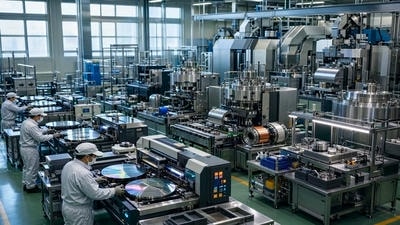
Earthquakes also impact the installed base of equipment worldwide. Regular maintenance and emergency repairs often depend on Japanese spare parts and consumables. If shipments are delayed or production is temporarily reduced, fabs may face extended tool downtime or must stretch existing inventories longer than planned.
Critical spares—such as specialized valves, sensor modules, ceramic heaters, or electrostatic chucks—are particularly sensitive. Without timely replacements, tools may operate at reduced performance or be taken offline. Consumables like photoresists, certain chemicals, or specialty components also affect process stability and yield if supply fluctuates.
Short‑term, fabs may prioritize use of limited spares for the most critical tools or processes and adopt more conservative maintenance scheduling to avoid unnecessary part changes until supply stabilizes.
Time scales of disruption: days, weeks, and a few months
Short‑term impact generally unfolds over several distinct time scales. In the first few days, the primary effect is operational shutdown at affected facilities and immediate logistics constraints. Over the next one to two weeks, companies complete damage assessments, begin repairs, and evaluate production restart plans.
Within a few weeks, many operations may resume, but with reduced output or adjusted schedules. Logistics gradually normalize as transport infrastructure is restored and shipping routes are cleared, though some bottlenecks can persist longer. In the one‑ to three‑month window, supply chain effects become clearer: backlogs, extended lead times, and prioritization decisions shape which customers receive equipment and parts first.
Beyond a few months, impacts typically shift from short‑term disruption to medium‑term adjustment and recovery, with longer‑term decisions about redundancy and resilience informed by what occurred in the immediate aftermath.
Mitigation mechanisms: safety stocks and multi‑site manufacturing
To limit short‑term impact, many equipment makers and component suppliers maintain safety stocks—buffer inventories of critical parts and materials stored in multiple locations. These buffers can cover several weeks of demand even if production is temporarily interrupted.
Multi‑site manufacturing strategies also help. Companies that produce key components at more than one factory, potentially in different regions, can shift workloads to less‑affected sites. While ramping alternate sites may not fully offset the loss of a major plant, it can reduce the severity of outages and keep essential shipments moving.
Short‑term, these mitigation mechanisms determine whether earthquakes cause limited delays or more serious supply gaps, particularly for high‑priority customers and critical tools.
Customer prioritization and allocation strategies
When supply is constrained, equipment makers and component suppliers often prioritize customers based on contractual obligations, strategic importance, and the criticality of their projects. High‑profile fab ramps, national strategic initiatives, or key long‑standing customers may receive preferential allocation of limited tools and parts.
This prioritization can reduce the impact for some fabs while shifting more of the burden to others, especially smaller or less strategically central operations. Short‑term, allocation strategies help suppliers manage reputational risk and maintain key relationships, but they can also create tension if customers perceive unfair treatment.
Transparent communication about constraints and prioritization criteria is essential to managing expectations and preserving trust during these disruptions.
Coordination with government and infrastructure authorities
In Japan, government agencies and infrastructure operators play important roles in post‑earthquake recovery. Restoring power, water, transport, and communications is a priority, and industrial regions often receive focused attention because of their economic significance.
Equipment and component manufacturers coordinate with these authorities to understand restoration timelines, access restrictions, and safety requirements. Government support can help accelerate repairs, provide temporary logistics solutions, or facilitate regulatory approvals needed for restarting production and exports.
Short‑term impact assessments must account for these external factors, as they shape how quickly factories can resume operations and how reliably international shipments can flow again.
Fabs’ immediate response: inventories, alternate sources, and scheduling
Fabs confronted with potential supply disruptions respond by reviewing their inventories of critical spares and consumables, identifying items sourced from affected Japanese suppliers. They may increase monitoring of tool health, avoid non‑essential part replacements, and reprioritize planned maintenance based on available spares.
Where alternate qualified suppliers exist, fabs may accelerate orders from those sources or begin qualifying additional vendors for future flexibility. In parallel, production scheduling can be adjusted to reduce reliance on tools at higher risk of downtime due to part shortages, or to shift product mix toward lines less exposed to specific components.
These short‑term adjustments help fabs preserve output and yield while navigating temporary uncertainties in their equipment supply chain.
Equipment makers’ immediate response: communication and contingency plans
Equipment manufacturers respond to earthquakes by activating contingency plans and increasing communication with customers. They assess their own operations and those of key suppliers, estimate lead time impacts, and update forecasts for tool and part deliveries.
Short‑term, they may reschedule shipments, adjust production plans, and reallocate limited components to the most critical orders. Customers are informed of expected delays, alternative options, and any temporary changes in service and support availability. Some manufacturers deploy additional field service or engineering resources to help customers manage equipment performance with available spares.
Effective short‑term impact management hinges on this rapid, transparent coordination between equipment makers and their global customer base.
Market reactions: pricing, lead times, and contract clauses
Short‑term market reactions to Japanese earthquakes often include changes in quoted lead times and, in some cases, pricing for constrained items. Suppliers may temporarily extend delivery estimates for specific tools or parts, reflecting reduced capacity or logistics delays. Spot markets for certain consumables or components might experience price increases if buyers compete for limited available stock.
Contractual clauses related to force majeure or supply disruptions can be invoked or discussed, as both suppliers and customers interpret their rights and obligations under unusual circumstances. Short‑term, these legal and commercial aspects influence how risk and cost are shared across the supply chain.
Over time, experiences during these events can influence future contract structures, with more explicit provisions for resilience, buffer stocks, and allocation mechanisms.
Learning from past events: improving short‑term resilience
Past earthquakes in Japan have provided lessons that shape current short‑term resilience. Companies have invested in more robust building designs, better securing of equipment, and improved emergency response protocols. Supply chains have added redundancy for critical parts, and cross‑training of staff supports quicker recovery.
Short‑term impact assessments reflect these improvements, often showing faster recovery times and more limited scope of disruption compared with earlier events where preparations were less mature. Nonetheless, each new event reveals additional vulnerabilities and opportunities for strengthening resilience further.
Incorporating these lessons into design, planning, and supply chain architecture reduces the likelihood that future earthquakes will cause severe short‑term shocks to global equipment flows.
Conclusion: short‑term disruption, long‑term focus on resilience
Earthquakes in Japan can cause short‑term disruptions to the global semiconductor equipment supply chain by temporarily halting production, complicating logistics, and stressing single‑source dependencies for critical components and consumables. In the weeks and months following a major event, equipment makers, component suppliers, and fabs work intensively to assess damage, restore operations, and manage limited supplies through buffers, allocation, and contingency strategies.
While most disruptions are ultimately resolved within a relatively short horizon, each event underscores the importance of resilience: diversified sourcing, safety stocks, robust infrastructure, and coordinated response plans. For a global industry that relies on Japan’s unique strengths in equipment and precision parts, understanding and preparing for these short‑term impacts remains a vital part of strategic and operational planning.