2026’s Biggest Variable for Equipment Localization: Complete Lithography System Progress
2026’s Biggest Variable for Equipment Localization: Complete Lithography System Progress
In semiconductor manufacturing, “equipment localization” has become a central strategic goal for many countries: building domestic or closely allied capability to produce and maintain the tools that make chips. Across etch, deposition, cleaning, test, and packaging, notable progress has been made. Yet in 2026, one segment still stands out as the biggest variable in localization efforts: complete lithography systems. Lithography remains the technical and strategic bottleneck, and the pace of progress toward localized, fully integrated lithography platforms will largely determine how far and how fast equipment localization can go.
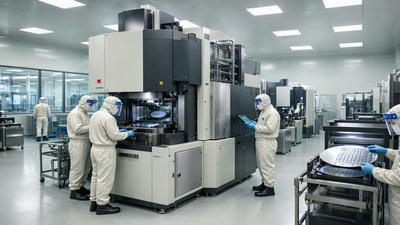
This blog post explores why complete lithography systems are so critical, what “localization” really means in this context, where progress is being made and where major gaps remain, and how the trajectory of lithography in 2026 shapes broader ambitions for localized semiconductor equipment ecosystems.
Why lithography lies at the center of localization
Lithography tools—scanners and steppers that pattern features on wafers—are the heart of semiconductor manufacturing. They define critical dimensions, overlay accuracy, and much of the process window for advanced nodes. Without access to capable lithography systems, fabs cannot produce leading-edge logic, memory, or many advanced specialty devices.
Other equipment types, while complex, often have more diverse supplier bases and lower barriers to partial localization. Lithography, by contrast, is dominated by a small number of global players with highly specialized technology stacks. This concentration makes lithography both a chokepoint in export control regimes and a focal point for localization strategies.
As a result, the progress of complete lithography system localization—beyond components into full, production-worthy platforms—is the biggest variable in determining how self-reliant any region’s equipment ecosystem can become.
What “complete lithography system” localization means
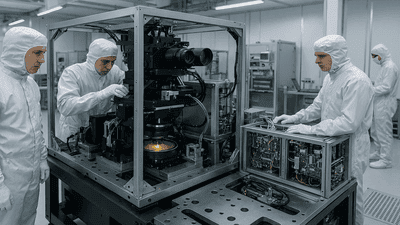
Localization in lithography is not just about making certain parts at home. A complete lithography system integrates optics, light sources, wafer stages, reticle stages, metrology subsystems, control electronics, software, and support infrastructure into a coherent, high-performance tool that meets fab requirements.
Partial steps—such as producing localized stages, certain optics, or components—are important but do not by themselves enable independent lithography capability. A localized, complete system means that a region can design, manufacture, assemble, calibrate, and support scanners and steppers from within its own industrial and research base, with minimal reliance on potentially restricted foreign technology.
Achieving this involves mastering not only hardware but also algorithms, process integration know-how, and long-term service models, making it one of the most demanding localization goals in the equipment landscape.
Segments where localization is already advancing
In 2026, many regions have made visible advances in localizing parts of lithography systems. Examples include:
Localized wafer stages and motion platforms, where precision mechanics and control are developed domestically; certain optical components, such as lenses or mirrors for specific wavelength regimes; and control electronics and software layers that manage alignment, overlay, and system health. In some markets, domestic patterning tools for mature nodes and specialty applications are already in production, demonstrating that localized lithography is feasible in defined niches.
These successes show that localization is not all-or-nothing, but they also highlight how much further regions must go to match the capabilities of leading global systems at advanced nodes.
The challenge of optics and light sources

High-end lithography depends on exceptional optics and sophisticated light sources. Deep ultraviolet (DUV) and extreme ultraviolet (EUV) systems require optics with nanometer-level precision, specialized coatings, and tight control over aberrations. Light sources must deliver stable, high-power output at specific wavelengths, integrated with the scanner’s timing and control mechanisms.
Localizing these elements is technically and economically challenging. Few companies worldwide have the experience and infrastructure to produce such optics and sources at scale and with the reliability fabs demand. Regions seeking localization must invest heavily in optical manufacturing, metrology, and source development, often over many years, before they can produce fully competitive components.
This optics and source bottleneck is one of the main reasons complete lithography system progress is the biggest variable in 2026: without credible solutions here, other localized subsystems cannot be fully leveraged.
Precision mechanics and stages: a relative bright spot
In contrast, precision mechanics and stage technologies represent a relative bright spot for localization. Advanced wafer and reticle stages require high-speed, low-vibration motion with nanometer-level positioning accuracy. Many regions have strong traditions in precision engineering, robotics, and CNC manufacturing that can be adapted to stage development.
Local companies and institutes are building capabilities in high-precision motion systems, vibration isolation, and real-time control, making it possible to design and produce stages domestically. While integrating these into complete lithography tools remains complex, progress in mechanical subsystems suggests that this part of the puzzle is more tractable than optics or sources for some localization strategies.
Nonetheless, stage technology must be tightly coupled with optics, metrology, and software to deliver competitive overlay and focus performance, so it cannot be viewed in isolation.
Software, algorithms, and overlay control
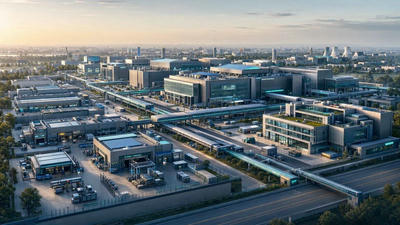
Lithography performance is increasingly driven by software and algorithms: overlay modeling, focus mapping, distortion correction, dose control, and process window optimization. Localizing a complete system therefore requires domestic capability in advanced algorithm development, control software architecture, and data analytics.
Regions investing in localization often build up research teams focused on computational lithography, control theory, and machine learning applied to scanner data. They develop software layers capable of interpreting metrology inputs, predicting wafer behavior, and adjusting tool parameters on the fly.
In 2026, progress in these areas is a key variable alongside hardware. Even with localized mechanical and optical subsystems, without robust software, localized scanners cannot achieve the overlay and CD control needed for advanced nodes. Conversely, strong software can partially compensate for hardware limitations at less demanding nodes, enabling more meaningful early localization steps.
Node segmentation: mature-node versus advanced-node goals
Not all localization efforts aim directly at the most advanced nodes. Many strategies focus first on mature-node lithography for applications such as power devices, analog, microcontrollers, and automotive chips. These nodes have wider process windows and less extreme overlay and resolution demands, making them more accessible to emerging local tool makers.
In 2026, localized complete systems at mature nodes are more plausible and, in some cases, already entering pilot production. The biggest variable is whether and how quickly localization can extend beyond these segments into truly advanced-node lithography, where the performance gap with established global tools is greatest.
This node segmentation creates a tiered localization journey: success at mature nodes proves capability and offers economic benefits, but full strategic autonomy in cutting-edge logic and memory depends on progress at advanced nodes, which remains uncertain.
Interaction with export controls and technology access
Export controls and technology access restrictions heavily influence lithography localization. Where access to leading-edge foreign scanners and components is constrained, pressure to develop local alternatives increases. However, restrictions can also limit collaboration, technology transfer, and access to key subsystems, making localization harder.
In 2026, this interplay is a central variable. Some regions may accelerate localized development in response to controls, prioritizing domestic programs and funding. Others may adopt hybrid strategies, combining imported tools for certain nodes with localized ones for mature segments. The path chosen affects both the pace and direction of complete system progress.
Ultimately, policy environments shape whether localization is a complement to global sourcing or a necessary substitute, and lithography sits at the focal point of this dynamic.
Role of research institutions and pilot lines
Research institutions and pilot lines play a critical role in advancing localized lithography systems. Universities, national labs, and corporate R&D centers often lead early-stage development and testing of optics, stages, sources, and software. Pilot fabs or demo lines provide real-world environments to integrate subsystems, run test wafers, and refine tool performance.
In 2026, progress in these arenas—how many pilot systems are running, what nodes they target, and how well they perform—is a key indicator of future localization success. Successful pilots can transition into limited commercial deployments, while unsuccessful ones highlight technical gaps that must be addressed before full-scale localization is viable.
The number and maturity of these pilot projects thus feed directly into the assessment of complete lithography system progress as the industry’s biggest localization variable.
Supply chain depth: from components to service
Complete lithography system localization requires not only initial manufacturing but also a deep support ecosystem: spare parts, consumables, field service, refurbishment, and upgrades. A localized scanner that cannot be reliably maintained or improved over its lifecycle does not provide true autonomy.
Regions working on localization must therefore build supply chains for optical replacements, stage components, control electronics, and specialized consumables, along with training programs and service networks. In 2026, the development of this ecosystem is uneven: some subsystems have strong local support, while others still rely on imported parts or expertise.
How quickly this depth can be achieved—moving from prototype tools to fully supported production platforms—is another major variable influencing the real-world impact of lithography localization efforts.
Economic trade-offs and investment intensity
Lithography localization demands large, sustained investments in R&D, facilities, and talent. Economically, regions must weigh these costs against potential benefits: reduced dependence on foreign tools, strategic autonomy, domestic industry growth, and long-term resilience.
In 2026, investment intensity and continuity are central to progress. Short bursts of funding are unlikely to suffice; lithography technology evolves continuously, and catching up or keeping pace requires persistent commitment. Economic conditions, policy priorities, and competing demands for capital all influence how much resources are devoted to localization programs.
These trade-offs make complete lithography system progress the biggest variable not just technically but financially: without stable investment, projects stall and gaps with global leaders widen; with committed funding, localization can steadily advance, even if timelines remain long.
Global collaboration versus independent development
Another dimension is the balance between global collaboration and independent development. Some localization strategies rely on partnerships with existing tool makers, joint ventures, or licensed production arrangements, extending domestic involvement without fully independent technology stacks. Others pursue more autonomous paths, aiming to build homegrown systems from the ground up.
In 2026, the mix of these approaches varies by region. Collaborative paths can accelerate progress but may remain subject to external policy constraints; independent paths offer more autonomy but take longer and require broader capabilities. The chosen balance shapes both the speed of localized system emergence and the degree of control regions ultimately achieve.
As a result, collaboration dynamics form part of the broader uncertainty around complete lithography system progress and its impact on equipment localization goals.
Implications for broader equipment localization
The state of lithography localization affects the entire equipment localization narrative. If complete lithography systems remain largely imported or restricted, localization in other tool categories, while valuable, cannot deliver full-stack autonomy for advanced nodes. Fabs may localize etch, deposition, cleaning, and test, but still depend on external scanners for key patterning steps.
Conversely, meaningful progress in lithography opens the door to more integrated localization strategies: fully domestic process modules, coordinated tool development, and complete, locally supported fab lines for certain nodes or product segments. Other equipment segments can then be tuned specifically to work with localized lithography platforms, reinforcing the ecosystem.
Thus, the evolution of complete lithography systems is the biggest variable for 2026 because it acts as a multiplier: success or stagnation here amplifies or constrains the impact of localization efforts elsewhere in the equipment chain.
Longer-term outlook beyond 2026
While 2026 offers a snapshot of progress and uncertainty, complete lithography system localization is inherently a multi-year endeavor. The trajectory observed now—number of prototypes, performance levels, ecosystem depth—will inform expectations for the late 2020s and early 2030s.
If steady, tangible advances continue, it is reasonable to expect localized lithography systems to play growing roles in mature-node segments and, later, more advanced nodes. If progress stalls or remains confined to partial subsystems without integrated tools, the equipment localization narrative may pivot toward hybrid models that accept persistent dependence on foreign lithography while focusing domestic efforts elsewhere.
In either case, 2026 stands out as a pivotal year for assessing how realistic and how near-term full-stack equipment localization ambitions are, with complete lithography systems as the single most important variable.
Conclusion: lithography as the keystone of localization
Among all semiconductor equipment categories, complete lithography systems occupy a unique position at the intersection of technology, economics, and strategy. Their complexity, centrality, and concentrated supplier landscape make them the keystone in any serious effort to localize semiconductor manufacturing tools.
In 2026, progress toward localized, fully integrated lithography platforms remains the biggest variable shaping how far equipment localization can go. Advances in optics, sources, stages, software, and service ecosystems will determine whether regions can build truly independent toolchains or must continue to rely on global suppliers for core patterning capabilities. For policymakers, industry leaders, and engineers, keeping a close eye on this variable is essential to understanding the realistic pathways and timelines for achieving greater autonomy in semiconductor manufacturing.