William Turner
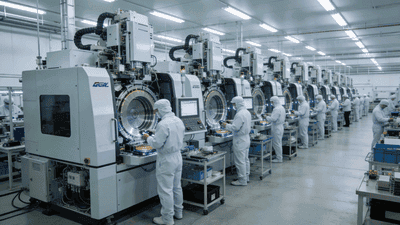
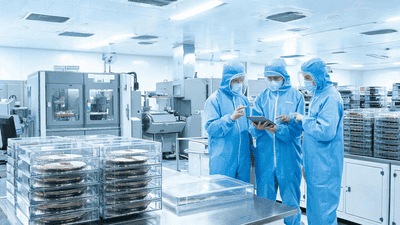
My research focuses on the manufacturing economics of HBM. I study wafer requirements, die production, stacking processes, bonding, yield, thermal constraints, testing, packaging integration, and capacity utilization. I am particularly interested in the manufacturing steps that determine how much usable HBM can ultimately be produced from a given amount of semiconductor capacity. I write for this publication because HBM production is considerably more complex than conventional memory manufacturing. Multiple DRAM dies must be processed, stacked, connected, packaged, tested, and qualified, and each stage can affect the final yield. A bottleneck at any point in this chain can influence production volume and manufacturing economics. My work examines wafer consumption, die yields, stacking efficiency, bonding processes, thermal management, packaging throughput, and testing requirements. I also study how improvements in manufacturing processes can affect production costs and capacity availability. Another major area of my research is the relationship between HBM manufacturing and advanced packaging. Memory stacks must be integrated with high-performance processors, which creates demanding requirements for package design, interconnect density, thermal performance, and manufacturing precision. These factors can affect both yield and overall system production. I also follow capital expenditure and equipment investment associated with HBM manufacturing. My goal is to explain the physical and economic constraints behind HBM capacity expansion and help readers understand why additional capacity cannot always be brought online immediately when demand increases.
Research Field
HBM manufacturing analyst covering wafer requirements, stacking, bonding, yield, thermal management, testing, packaging throughput, and production economics.
Introduction
William Turner is an HBM manufacturing analyst who studies the production processes and manufacturing economics behind high-bandwidth memory. His work focuses on the technical steps that determine HBM output, yield, capacity, and production efficiency.
William examines wafer consumption, DRAM die production, stacking, bonding, interconnect formation, thermal management, packaging, and testing. His research highlights how multiple manufacturing stages must work together before an HBM product can reach final qualification.
Yield is a major focus of William's coverage. Because HBM involves multiple dies and complex stacking processes, manufacturing yield can have a significant effect on usable output and production economics. He follows process improvements and manufacturing changes that may influence these conditions.
William also researches the relationship between HBM manufacturing and advanced packaging. Integrating memory stacks with high-performance processors requires precise package structures, dense interconnects, thermal solutions, and specialized manufacturing processes.
Through his contributions, William provides readers with a manufacturing-level view of HBM capacity expansion and explains the technical and economic constraints that influence the growth of high-bandwidth memory production.