Equipment Order Backlog Visibility: Why 2027 Deliveries Are Already Booked
For selected semiconductor equipment suppliers, 2027 is already taking shape inside the order book. Customers are reserving systems before the delivery year begins, manufacturers are allocating production capacity, and component suppliers are preparing for schedules that extend beyond the next quarterly earnings report.
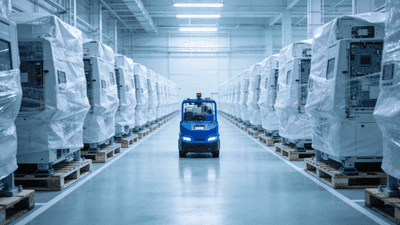
This does not mean every front-end and back-end equipment category is sold out. It means that certain critical tools have become part of a longer planning cycle. Leading-edge manufacturing, AI-related memory, and advanced packaging are encouraging customers to secure capacity well ahead of installation.
The central issue is visibility: how much of tomorrow’s business is supported by committed orders today, and how reliably those orders will become revenue. A backlog can provide meaningful evidence of demand, but its value depends on delivery timing, customer readiness, contractual conditions, and the supplier’s ability to execute.
Why the 2027 Order Book Is Filling Early
Semiconductor equipment is not purchased like an interchangeable industrial component. Many systems require specialized manufacturing, customer-specific configurations, extensive testing, and coordinated installation. Ordering early can be necessary simply to keep a manufacturing project on schedule.
Recent developments illustrate the depth of forward demand. ASML entered 2026 with a backlog approaching €39 billion. In advanced packaging, Camtek’s September commentary described delivery visibility extending into 2027, with many new bookings scheduled for that year rather than 2026. These examples demonstrate forward commitments in specific segments, not universal tightness across the equipment industry.
For a chipmaker, the logic is straightforward. A late tool can delay a production ramp even if the building, workforce, and other equipment are ready. Reserving a delivery position reduces that scheduling risk.
For an equipment supplier, those reservations support production planning. They also shift the challenge from finding orders toward completing systems and coordinating deliveries.
Bookings, Backlog, and Revenue Are Different Measures
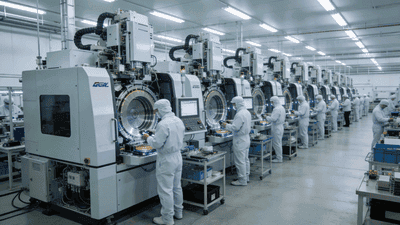
The terminology matters because these figures describe different stages of the commercial process. Bookings generally represent orders recorded during a period. Backlog represents outstanding orders that have not yet been recognized as revenue under the company’s reporting practices.
Revenue arrives later, according to the applicable accounting policy and contractual conditions. Shipment, delivery, installation, and customer acceptance can have different significance depending on the equipment and arrangement.
A strong bookings quarter therefore does not guarantee an immediate revenue increase. If most newly ordered systems are scheduled for 2027, they can improve longer-term visibility without materially changing the near-term sales outlook.
Backlog definitions also vary. Analysts should examine what a company includes, whether service items are present, and how adjustments are handled. Comparing headline order books without understanding these differences can create a false impression of relative strength.
Customers Are Buying a Production Schedule
From a fab manager’s perspective, a tool purchase is also a claim on a future manufacturing milestone. The system must arrive when the site can receive it and early enough to support installation, qualification, and production ramp-up.
That creates a sequence of dependencies. Facilities need power, process utilities, suitable cleanroom conditions, and trained personnel. Equipment must be integrated with the intended process flow. Materials and supporting systems must also be available.
Ordering early helps protect one part of that sequence, but it cannot eliminate all the others. A reserved delivery slot is useful only if the customer can take delivery and put the system to work.
This explains why longer backlog visibility can coexist with schedule changes. A customer may remain committed to a project while adjusting the timing of individual tools as construction or process development evolves.
Front-End Demand Is Concentrated in Critical Capabilities
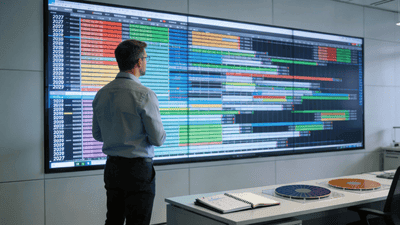
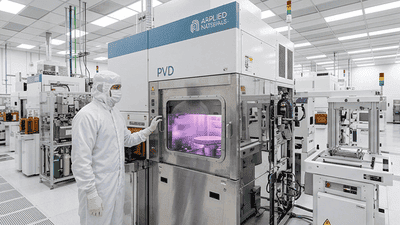
Front-end equipment supports wafer fabrication through lithography, deposition, etching, cleaning, implantation, and process control. Demand across these categories depends on the customer’s technology roadmap and the capacity being added.
A leading-edge expansion does not require identical spending growth in every tool family. Different process transitions alter the mix of equipment needed, while existing capacity and productivity improvements influence incremental purchases.
Some systems also have distinctive supply constraints. Specialized components, manufacturing expertise, and testing requirements can make production difficult to increase quickly. Where these constraints coincide with strong customer demand, delivery positions become especially valuable.
The practical conclusion is that “2027 already booked” should be applied selectively. It is more informative to identify the constrained capability and customer application than to treat the entire wafer fabrication equipment market as one queue.
AI Demand Connects Logic and Memory Investment
AI infrastructure creates incentives to invest in both compute devices and the memory supporting them. Equipment suppliers can therefore benefit through multiple customer groups rather than one isolated manufacturing program.
However, the investment logic differs by application. A logic manufacturer’s technology transition, a memory producer’s capacity expansion, and an upgrade to an existing production line can generate different equipment requirements.
From an investor’s perspective, broad AI exposure is less useful than understanding which systems are ordered and why. Orders supporting an established production ramp may carry a different execution profile from those associated with a new technology introduction.
The connection is important, but it should not become a shortcut. AI-related spending can strengthen forward demand while leaving other semiconductor markets uneven. A concentrated backlog may be commercially attractive and still require careful assessment of customer and application risk.
Advanced Packaging Brings Back-End Equipment into the Picture
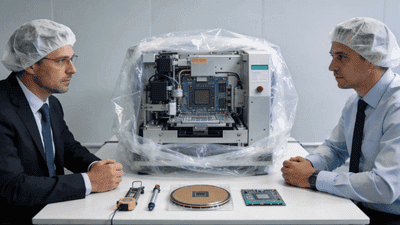
The forward-order story is not limited to wafer fabrication. Advanced packaging requires coordinated investment in assembly processes, inspection, metrology, handling, and testing. As package structures become more demanding, equipment planning becomes increasingly consequential.
Camtek’s reported order profile illustrates this development: advanced packaging accounted for a substantial majority of its recent orders, while outsourced assembly and test customers represented more than half of order intake. Its commentary also connected strong bookings with deliveries scheduled into 2027.
This shows why back-end spending should not be treated as a residual category that merely follows front-end expansion. Packaging can become a separate capacity constraint requiring its own purchasing decisions.
A wafer containing functional devices does not become a finished product without the subsequent manufacturing stages. Customers therefore need balanced capacity across the chain, not simply more wafer starts.
Packaging Orders Need to Be Read by Process Step
“Advanced packaging equipment” covers a wide range of systems. Bonding, lithography, wet processing, inspection, and testing do not share identical market conditions or delivery constraints.
A customer expanding one package architecture may emphasize different tools from another customer pursuing a different approach. Production yields and existing equipment utilization also influence how much new capacity is required.
For suppliers, this creates selective opportunities. A company can experience strong bookings because its tool addresses a specific production bottleneck, even when broader assembly demand is less consistent.
For analysts, the key is to connect orders to the manufacturing step. A large packaging backlog becomes more informative when the customer application, capacity objective, and expected delivery schedule are understood.
Long Lead Times Can Signal Strength—or Friction
Longer lead times are often interpreted as proof of strong demand. Sometimes that is correct. They can also reflect component shortages, testing constraints, engineering complexity, or insufficient manufacturing capacity.
The distinction matters financially. Demand-led tightness may support production expansion and stronger commercial conditions. Supply-side disruption can delay revenue, increase costs, and make delivery performance less predictable.
A supplier may face both simultaneously: more orders than before, combined with difficulty obtaining critical components. Its backlog grows, but the increase does not immediately translate into higher output.
Management commentary should therefore be examined for the source of the delay. Is the business allocating scarce capacity because customers are ordering more, or is it struggling to complete systems already promised? The answer changes how the order book should be valued.
Backlog Quality Matters More Than Its Size
Two companies with similarly sized backlogs can have different levels of confidence in future revenue. Customer commitments, payment arrangements, project maturity, and delivery schedules all influence the strength of the order book.
An order linked to a funded, operational site can differ from one dependent on a facility still under construction. Likewise, a customer with a proven manufacturing ramp may present a different risk from a project introducing several untested elements at once.
Cancellation and rescheduling provisions matter, but they should not be assumed. Contractual arrangements vary, and public disclosures may not provide enough detail to quantify their effect.
A useful assessment therefore combines the reported backlog with evidence of customer readiness and supplier execution. The headline total is a starting point, not a complete measure of commercial certainty.
Delays Can Move Revenue Without Destroying Demand
Equipment orders are often discussed in binary terms: either they ship or they are cancelled. In practice, timing changes can be just as important.
A customer may defer delivery because site infrastructure is late, process qualification takes longer than expected, or another tool becomes the immediate priority. The underlying project can remain intact while revenue moves into a later period.
For an equipment manufacturer, that can affect factory scheduling, inventory, field-service deployment, and cash flow. For investors, it can produce disappointing quarterly results despite a still-healthy long-term order book.
The distinction between demand loss and timing displacement is essential. Both affect near-term forecasts, but they imply different outcomes. Strong backlog visibility reduces uncertainty about customer intentions more readily than it eliminates uncertainty about execution dates.
The Supplier’s Own Capacity Becomes the Next Test
Once orders are secured, attention shifts toward manufacturing capacity. Additional demand is valuable only if the supplier can build, test, and deliver systems at an acceptable cost.
Expanding output requires more than factory space. Specialized suppliers must increase their contribution, production teams need training, and quality control must remain consistent. Field engineers also need sufficient capacity to support installation and service.
These requirements can limit how quickly a company converts bookings into sales. An ambitious shipment target may depend on several partners expanding successfully at the same time.
For that reason, announced capacity should be distinguished from productive capacity. Investors should look for evidence that expansion is improving throughput without creating excessive rework, working-capital demands, or delivery instability.
A Practical Framework for Reading 2027 Visibility
The most useful questions connect demand commitments with delivery capability.
- How much backlog is scheduled specifically for 2027 rather than later years?
- Which equipment categories and customer applications account for the increase?
- Are customers ready to receive and install the systems?
- Does the supplier have the components, production capacity, and field support required?
- Are shipment dates holding, or are orders moving between periods?
- How will product mix and execution costs affect profitability?
These questions help separate genuine revenue visibility from a large but loosely interpreted order total. They also provide a better basis for comparing front-end suppliers with packaging and test companies.
What Early Booking Really Tells Us
Orders placed for 2027 show that selected customers are planning beyond immediate production needs and that certain equipment capabilities must be secured well in advance. That is meaningful evidence of investment intent.
It is not a guarantee that every system will ship on its original date or that every equipment company will benefit equally. The strength of the cycle remains dependent on customer readiness, manufacturing execution, and the balance of capacity across front-end and back-end processes.
The next competitive advantage belongs to suppliers that turn booked capacity into timely, qualified installations. In semiconductor equipment, the order book opens the story. Delivery performance determines how much of it becomes real.