Ceramic Component Localization: The 10% to 30% Path
A ceramic component rarely becomes the public face of semiconductor manufacturing. It does not carry the recognition of a lithography scanner or the commercial excitement of an AI accelerator. Yet inside a process chamber or power-device package, it can determine whether equipment operates consistently and whether a finished device survives its intended conditions.
That importance explains the interest in localization. Manufacturers want more dependable access to critical parts, equipment companies want qualified regional suppliers, and emerging ceramic specialists want to move beyond prototypes into recurring production.
The “10% to 30%” path is best understood here as an illustrative localization objective, not a verified industry-wide starting point or forecast. Its significance is the transition it describes: from limited participation to meaningful supply-chain responsibility. The challenge is not simply tripling local output. It is building repeatability across materials, manufacturing, qualification, and delivery.
First, Define What the Percentage Measures
Before discussing localization targets, the denominator needs to be clear. Ten percent of component purchases by value is different from ten percent by unit count. Neither necessarily equals ten percent of critical process capability.
A supplier could localize large quantities of relatively simple parts while customers remained dependent on imported high-value assemblies. Alternatively, a few qualified complex components could represent substantial purchasing value without changing the broader unit share very much.
The geographic boundary also matters. Local machining of an imported ceramic blank is not equivalent to local powder preparation, forming, sintering, machining, and functional assembly.
A useful target therefore specifies the product categories, measurement basis, and manufacturing activities included. Without those definitions, a rise from 10% to 30% can sound impressive while revealing little about resilience or technological progress.
Two Markets: Equipment Components and Device Packaging
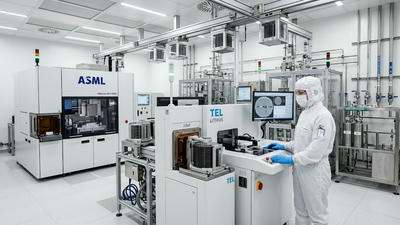
Semiconductor ceramics occupy two related but distinct positions. In front-end manufacturing, they form parts of equipment that processes wafers. In back-end applications, they can become substrates, packages, and supporting structures associated with finished devices.
Equipment applications include electrical insulation, wafer support, thermal management, and components exposed to demanding chamber environments. Packaging applications emphasize combinations of heat dissipation, insulation, mechanical support, and interconnection compatibility.
Aluminum nitride illustrates the overlap. It is used in heat-dissipating semiconductor substrates and packages, and also in semiconductor manufacturing equipment. That shared material platform does not make the finished products interchangeable; each application imposes different requirements.
For a localization strategy, the distinction is fundamental. Success in one market may create useful expertise, but it does not automatically qualify a supplier for the other.
The Material Name Is Only the Beginning
Alumina, aluminum nitride, and silicon nitride are often discussed as broad ceramic categories. Customers, however, purchase finished components whose properties depend on much more than the material label.
Powder quality, additives, density, microstructure, processing conditions, and finishing all influence performance. Two suppliers can advertise the same ceramic family while producing components with different consistency and operating behavior.
That creates an important distinction between reproducing a drawing and reproducing a functional result. Dimensions may be necessary for acceptance, but they are not always sufficient.
From a customer’s perspective, the essential question is whether the component remains suitable under actual operating conditions. From a supplier’s perspective, localization requires control of the manufacturing route, not merely familiarity with the nominal composition.
Why the First 10% May Be Easier

An early localization program often begins with components that are relatively accessible to evaluate and replace. The objective is to establish manufacturing competence, build customer confidence, and develop commercial relationships without taking excessive production risk.
These initial products can still require precision and quality discipline. “Easier” does not mean unimportant. It means the path to proving suitability may be more manageable than for a highly integrated functional assembly.
For a new supplier, the first recurring orders provide valuable operating experience. They reveal whether production yields, inspection methods, packaging, and delivery schedules remain consistent outside a laboratory environment.
However, the next stage cannot always be achieved by repeating the same approach at greater volume. Moving toward 30% may require entering more demanding categories where qualification is longer and failures carry larger consequences.
Front-End Qualification Is About Process Outcomes
Inside a fab, a component is judged by what it does to manufacturing performance. A part that fits correctly may still affect contamination, temperature behavior, pressure conditions, or chamber consistency.
Electrostatic chucks provide a clear example of functional complexity. These assemblies use embedded electrodes to hold wafers through electrostatic attraction and support wafer handling and thermal control during processing. Ceramic selection and construction are therefore part of the operating system, not cosmetic design choices.
A replacement may need evaluation across multiple conditions rather than one acceptance test. Customers want confidence that performance remains stable over repeated runs and a useful service interval.
The implication for localization is straightforward: component approval must be connected to process evidence. Producing an attractive sample is an opening achievement. Demonstrating consistent operation in the intended equipment is the commercial milestone.
Back-End Progress Requires Interface Reliability

Packaging introduces a different set of challenges. A ceramic substrate must work with the metals, joining materials, and device structures around it.
Heat dissipation and electrical insulation matter, but so do mechanical compatibility and the behavior of interfaces during assembly and service. A ceramic that performs well in isolation can still be unsuitable within a complete package.
For a device manufacturer, the question is whether the finished assembly remains reliable under its intended conditions. For a substrate supplier, this requires understanding customer processing rather than treating the ceramic plate as a standalone product.
Localization programs therefore benefit from joint development. Ceramic manufacturing, metallization, joining, and package design need coordination. Progress is more durable when suppliers help solve the interface problem instead of simply offering a lower-priced substrate.
The Real Manufacturing Bottleneck May Be Yield
Capacity expansion is visible: new equipment, larger buildings, and additional production lines. Yield improvement is less visible but often more important.
Ceramic processing involves multiple opportunities for variation. Forming, sintering, machining, and finishing must produce the required properties and dimensions consistently. A component can accumulate significant cost before a final defect makes it unusable.
For a supplier, low yield reduces commercially available capacity and weakens pricing flexibility. For a customer, inconsistent yield can translate into unreliable deliveries even when nominal factory capacity looks adequate.
The path toward 30% therefore needs to be measured in accepted output. Installed production capacity is not the same as customer-qualified shipment capacity. A smaller operation with stable yields may provide greater practical resilience than a larger but unpredictable one.
Metrology Turns Craft into a Production System
Precision ceramics require inspection methods capable of identifying the characteristics that matter. Dimensional measurements are important, but functional applications may also require verification of material properties, surface condition, or electrical behavior.
The purpose is not simply to generate more inspection documents. It is to establish whether the manufacturing process remains controlled and whether unusual results can be traced to their cause.
A supplier moving beyond its first customers needs disciplined lot identification, consistent test methods, and clear rules for handling deviations. Otherwise, growth can magnify variability rather than reduce it.
From the customer’s viewpoint, traceability improves confidence and troubleshooting. From the supplier’s viewpoint, it supports learning. Reliable data makes it easier to distinguish a material problem from a machining issue or an application mismatch.
Qualification Is a Shared Investment
Customers cannot establish local alternatives without committing engineering resources. Suppliers cannot qualify meaningful products without access to relevant requirements and feedback.
This creates a coordination problem. Buyers may want proven performance before expanding orders, while suppliers need enough commercial opportunity to justify development and process investment.
The most productive response is a staged program: agreed specifications, controlled trials, defined review points, and expansion based on evidence. That approach reduces uncertainty without pretending the initial product is already fully mature.
It also clarifies responsibility. Customers retain control over manufacturing risk, while suppliers receive a realistic development path. Localization progresses more reliably when both sides understand what success means and what evidence is required to demonstrate it.
Local Production Can Still Depend on Imported Inputs
A domestically manufactured component may rely on imported powders, specialized furnaces, machining equipment, coatings, or other inputs. That does not make the local manufacturing contribution irrelevant, but it limits claims of independence.
The right analysis follows the chain. Which activities are performed locally? Which inputs have alternatives? Which dependencies could interrupt output?
For an equipment maker, local repair or refurbishment capability may provide substantial value even before complete upstream localization is achieved. For a policy maker, the priority might be a different stage with broader industrial significance.
There is no need to insist that every input become local immediately. A more practical objective is to identify critical dependencies and reduce them in a sequence that improves reliability without sacrificing performance.
Pricing Should Reflect the Cost of Use
Lower purchase prices can help a local supplier gain attention, but they do not establish a sustainable advantage on their own. Customers must consider useful life, consistency, maintenance requirements, and the consequences of failure.
A cheaper component that needs more frequent replacement may not reduce total cost. Equally, an incumbent supplier’s premium becomes harder to defend when a qualified local alternative delivers comparable results.
For the emerging supplier, aggressive discounting can also be dangerous. It may leave insufficient resources for inspection, engineering support, and process improvement—the capabilities needed to progress into more demanding products.
The stronger commercial proposition combines acceptable performance with dependable delivery and competitive lifetime economics. Price matters most when customers can compare genuinely usable alternatives.
A Practical Road Map from 10% to 30%
The transition becomes more manageable when divided into capability milestones rather than treated as one market-share jump.
- Define the target market and measurement basis so progress is comparable over time.
- Stabilize existing products through repeat deliveries and consistent manufacturing yields.
- Select adjacent components that use established capabilities but add meaningful customer value.
- Develop more complex assemblies through joint engineering and application testing.
- Expand production only as qualification and demand justify the investment.
- Reduce critical upstream dependencies while maintaining quality and delivery performance.
This sequence is not universal. Equipment components and packaging substrates may progress differently. The common principle is that each expansion should rest on demonstrated capability rather than an ambitious percentage alone.
What Investors and Buyers Should Watch
The most informative indicators are repeat orders, expanding qualified product lists, stable yields, and customer adoption across more than one application. These reveal whether localization is becoming a durable operating business.
Revenue growth deserves interpretation. It can come from additional capacity, a richer product mix, or one large customer project. Each carries different implications for profitability and concentration risk.
Buyers should examine response times, traceability, and performance consistency alongside pricing. Investors should examine cash requirements and margins alongside strategic relevance. A technically important product can still be commercially difficult to scale.
From Participation to Responsibility
The move from 10% to 30% represents more than additional local purchases. It marks a shift from proving that a supplier can participate to trusting that supplier with a meaningful share of production requirements.
Across front-end equipment and back-end device packaging, that trust depends on controlled materials, reliable manufacturing, and application-specific evidence. Geographic proximity helps, but it cannot replace those foundations.
The strongest localization programs will not chase the percentage first. They will build the capabilities that make the percentage sustainable—and turn ceramic components from an imported dependency into a dependable regional strength.