Semiconductor Material Hidden Champions: The Small-Cap Opportunity Map
The semiconductor market rewards visible products: accelerators, memory, leading-edge manufacturing, and the equipment that makes them possible. Far less visible are the materials that allow those operations to run consistently. A wafer, photoresist formulation, specialty gas, or sputtering target may attract little attention until its quality or availability becomes a production problem.
That creates an appealing small-cap investment narrative. Find a specialized supplier with a difficult process, a qualified product, and a modest valuation before the broader market recognizes its importance.
The narrative is useful, but incomplete. A technically essential material can belong to an unprofitable business. A domestic supplier can remain dependent on imported inputs. A successful qualification can produce limited revenue. The opportunity map therefore needs to separate engineering relevance from commercial strength—and commercial strength from an attractive share price.
What Makes a Hidden Champion?
A hidden champion is not simply a small company operating in an exciting industry. It is a business with a defensible position in a narrow application, supported by repeatable manufacturing and customer acceptance.
Its advantage may come from purification, formulation, crystal control, particle management, microstructure, or process integration. The customer values consistency because a material failure can compromise output worth much more than the material itself.
But “small cap” is a market classification, not a technical credential. It changes with share prices and varies across exchanges. Some companies also combine semiconductor materials with less specialized businesses.
For research purposes, define the capitalization range and measure semiconductor revenue exposure separately. Otherwise, the portfolio can become a collection of attractive labels with limited connection to the intended opportunity.
The Opportunity Map Has Four Main Territories

Silicon wafers, photoresists, specialty gases, and sputtering targets occupy different places in the manufacturing flow. Their competitive advantages and financial risks are not interchangeable.
- Wafers provide the physical starting platform and engineered substrate properties.
- Photoresists translate lithographic exposure into patterns that subsequent processing uses.
- Gases support deposition, etching, cleaning, implantation, and other operations.
- Targets provide source material for physical vapor deposition.
The common theme is controlled manufacturing. The investment differences lie in qualification, capacity requirements, consumable demand, raw-material exposure, and customer concentration.
Begin with those differences rather than assigning every supplier the same growth assumption because semiconductor demand is expanding.
Silicon Wafers: Specialization Can Matter More Than Scale
Mainstream wafer production requires substantial capital, process expertise, and customer relationships. Competing directly with established suppliers is not an easy small-company strategy.
More focused opportunities can exist in specialized substrates, epitaxial products, engineered structures, reclamation, or application-specific processing. Each needs its own commercial assessment.
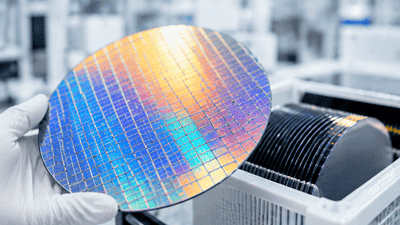
Wafer specifications include more than diameter. Flatness, defects, resistivity, surface condition, thickness, and other properties influence suitability for a customer’s process.
The materials engineer asks whether the wafer performs consistently. The investor asks whether the supplier can deliver that performance at sufficient volume and adequate returns on capital. A promising specification without productive capacity answers only the first question.
Wafer Capacity Is Not Wafer Acceptance

A new production line may have a stated input capacity while delivering fewer customer-accepted wafers. Yield, product mix, maintenance, and qualification affect usable output.
The distinction is particularly important when a supplier moves into a more demanding product. Existing experience provides a foundation, not automatic approval.
Large investments can also precede revenue by a meaningful period. Depreciation and financing costs may rise before utilization improves.
A credible wafer thesis connects installed equipment with qualified output, customer orders, pricing, and cash flow. Merely identifying a capacity expansion does not establish shareholder value creation.
Photoresists: The Formula Is Only Part of the Product
Photoresist performance depends on how the formulation behaves within a lithographic process. Resolution, sensitivity, roughness, defect control, and compatibility with downstream operations matter together.
Producing an acceptable laboratory result is different from maintaining consistent performance across customer lots. Raw-material purity, filtration, storage, and manufacturing controls are part of the capability.
Different exposure technologies and applications require different products. Success in one resist category does not prove readiness for another, and advanced-packaging resists should not be confused with leading-edge wafer-fabrication materials.
For a smaller supplier, the strongest entry point may be a precisely defined application rather than a claim to replace an entire incumbent product family.
Qualification Is the Bridge to Recurring Revenue

A customer evaluating a resist needs confidence in the complete process window, not one attractive measurement. Changing the material can require adjustments to exposure, development, and subsequent processing.
That creates switching costs and potentially durable relationships. It also makes revenue forecasts difficult when the company remains at the sampling stage.
Track engineering evaluation, process approval, production use, and repeat purchasing separately. A sample shipment is progress, but not evidence of sustained commercial demand.
The company should also disclose enough information to distinguish product development from customer-funded production. When disclosure is limited, uncertainty belongs in the valuation rather than being filled with optimistic assumptions.
Specialty Gases: Purity Meets Delivery Reliability
Specialty-gas suppliers serve demanding processes, but their value extends beyond the molecule. Purification, analytical control, packaging, transport, and dependable delivery all contribute.
A contaminant introduced during cylinder preparation or distribution can undermine an otherwise high-quality production process. Supply-chain controls therefore matter as much as nominal purity.
Some businesses produce gases; others purify, blend, package, or distribute them. Their margins, capital needs, and supplier dependencies differ.
The analyst should identify which activities the company actually owns. A distributor with valuable customer access can be a good business, but it should not be valued as though it controls a difficult synthesis technology.
Gas Demand Is Process-Specific
More wafer production can increase gas consumption, while process changes can alter the amount and type used. Additional layers, different materials, or new chamber recipes create uneven opportunities.
Supply constraints can raise prices temporarily. That is not the same as a permanent improvement in competitive position.
Long-term contracts may support visibility while limiting the immediate benefit from spot-price increases. Energy costs, feedstock availability, cylinder inventories, and logistics can affect profitability.
The strongest thesis links a qualified gas application to recurring consumption and reliable supply economics. A headline shortage is a starting point for investigation, not a complete investment case.
Sputtering Targets: Purity Is Necessary, Not Sufficient
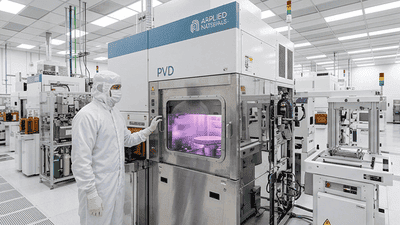
A sputtering target supplies material deposited as a thin film through physical vapor deposition. Its composition and condition influence the resulting process.
Target performance depends on purity, density, grain structure, uniformity, bonding, and the customer’s operating environment. A high-purity metal specification alone does not establish a qualified semiconductor product.
Supplier documentation illustrates that distinction. Semiconductor target offerings emphasize high purity alongside low particle generation, high density, and controlled microstructure; copper targets, for example, may use extremely high purity while also being engineered to reduce particulate matter.
For a small company, the defensible capability may reside in the combination of metallurgy, fabrication, and process support—not merely access to the underlying metal.
Targets Connect Technology With Commodity Exposure
Target suppliers can face raw-material price movements even when their finished products are highly specialized. Contracts may include pass-through mechanisms, but timing and accounting treatment affect margins and working capital.
A rise in reported revenue can therefore reflect higher metal prices rather than stronger unit demand or greater manufacturing value added.
Investors should separate volume, product mix, processing margin, and raw-material effects. Inventory valuation and metal recovery practices can also influence results.
The relevant question is how much economic value the company retains from its manufacturing capability, not simply how much expensive metal passes through its income statement.
Advanced Packaging Creates Adjacent Opportunities
CoWoS-related integration, chiplets, and 3DIC can increase demands on plating, cleaning, redistribution-layer materials, encapsulation, bonding interfaces, and thermal management.
Some front-end materials suppliers can extend their expertise into these applications. Others may require substantial redevelopment and qualification.
The opportunity should be assessed product by product. A company associated with semiconductor chemistry does not automatically possess a competitive advanced-packaging formulation.
Nor does participation imply material revenue exposure. Small development programs can be strategically interesting without yet being financially meaningful. The bridge from relevance to earnings must remain visible.
Localization Is a Catalyst, Not a Moat
Customers may seek local alternatives for resilience, shorter lead times, technical support, or procurement flexibility. Policy support can accelerate evaluation and investment.
But local origin does not establish acceptable purity, process behavior, or manufacturing consistency. Imported raw materials and equipment can remain important dependencies.
Localization should therefore be decomposed into formulation ownership, production location, upstream sourcing, and customer qualification.
The key word is qualification. A domestic product becomes commercially valuable when it repeatedly meets the customer’s requirements—not merely when a facility opens or a substitution target appears in a presentation.
The Small-Cap Risk Is Often Financial
A company can possess promising technology and still lack the funding needed to commercialize it. Capacity additions, quality systems, inventory, and customer support require cash.
Negative free cash flow may reflect productive investment, but investors need to understand the runway and likely financing requirements. Equity issuance can dilute existing shareholders even when operating progress continues.
Debt adds maturity and covenant risks, particularly if customer qualification takes longer than expected.
The investment thesis should specify what the business must achieve before it needs more capital. Technical success without financial survivability is not an attractive asymmetry.
Read the Accounts Like a Manufacturing Analyst
Revenue growth deserves reconciliation with receivables, inventory, operating cash flow, and capital expenditure.
Rising receivables can reflect expansion, payment terms, or delayed collection. Inventory can support supply resilience or signal weaker demand. Neither automatically proves a problem, but both require explanation.
Government grants and other non-recurring items should be distinguished from recurring operating economics. Capitalized development costs also need scrutiny.
The objective is not to punish young companies for investing. It is to identify whether reported progress translates into customer acceptance, cash collection, and a sustainable manufacturing model.
Build a Watchlist, Not a Story Collection
A practical opportunity map should score companies across several dimensions:
- Verified semiconductor revenue exposure.
- Specific technical differentiation.
- Qualification status and repeat production orders.
- Customer and upstream-supplier concentration.
- Qualified capacity and utilization.
- Margins, cash conversion, and financing needs.
- Valuation relative to realistic commercial outcomes.
- Share liquidity, governance, and disclosure quality.
No single score should determine the decision. The framework helps reveal contradictions: impressive technology with weak funding, strong growth with poor collection, or attractive localization prospects with limited product ownership.
Valuation Must Reflect the Stage of Development
An established supplier with recurring qualified demand can be assessed differently from a business still developing its production process.
For earlier-stage companies, scenario analysis is more honest than one precise earnings forecast. Estimate the consequences of successful qualification, slower adoption, and financing dilution.
For mature suppliers, normalize cyclical demand and separate commodity effects from operating value. A low multiple based on peak profits may not represent a bargain.
Small capitalization also does not imply low valuation. A narrow thematic story can command a demanding price, particularly when tradable shares are limited.
The Opportunity Is Precision, Not Obscurity
Semiconductor materials contain genuine opportunities for specialized companies. Their products can be inexpensive relative to the systems they support, yet difficult to replace once qualified.
That combination can create durable economics—but only when technical capability is supported by consistent manufacturing, customer acceptance, and financial discipline.
The best hidden champion is not the least discussed stock or the most fashionable localization candidate. It is a business whose narrow expertise solves a consequential production problem and whose valuation leaves room for a realistic outcome.
Follow the material into the process, follow qualification into repeat orders, and follow earnings into cash. That is how a small-cap opportunity map becomes an investment framework rather than a catalogue of possibilities.