Micron’s Completed PSMC Acquisition: The Taiwan DRAM Capacity Timeline
Micron’s completed Taiwan transaction gives the company an important asset in the race to expand memory production: an existing manufacturing site that can be adapted rather than built entirely from the ground up. But ownership is only the first milestone. The commercial value depends on retrofitting, equipment installation, process qualification, and the pace at which the facility produces accepted products.

The transaction was not an acquisition of PSMC as a company. On March 15, 2026, Micron completed its purchase of PSMC’s Tongluo P5 site in Miaoli County, Taiwan. The approximately $1.8 billion transaction covered a site with about 300,000 square feet of existing 300mm cleanroom space. Micron said meaningful product shipments from the existing fab were expected to begin in fiscal 2028.
The central theme is readiness: converting available space into qualified supply for leading-edge DRAM, including HBM, while keeping the timeline distinct from immediate DDR5 or NAND availability.
What Micron Bought—and What It Did Not
The acquisition secured the Tongluo P5 facility, not all of Powerchip Semiconductor Manufacturing Corporation’s operations. PSMC remained a separate business.
That distinction matters because a site acquisition and a corporate acquisition create different integration requirements. Micron obtained a physical manufacturing asset that it intended to equip and adapt for its own production needs.
The transaction should therefore not be described as Micron inheriting a fully operational leading-edge DRAM line ready to produce its qualified products immediately.
For investors, the useful interpretation is access to an established location and cleanroom infrastructure. The remaining work determines when that infrastructure contributes commercially.
The Timeline Has Two Different Output Milestones
Micron’s January announcement anticipated meaningful DRAM wafer output beginning in the second half of calendar 2027. Its March completion announcement described meaningful product shipments beginning in fiscal 2028.
These statements use different calendars and different manufacturing milestones. They should not automatically be interpreted as contradictory or as evidence of a delay.
Wafer output occurs before the complete sequence of testing, packaging where required, and shipment. Fiscal 2028 is also not identical to calendar 2028.
For an analyst, the correct approach is to preserve both definitions. The initial production contribution and the arrival of commercially meaningful shipments are related, but they are not the same event.
Existing Cleanrooms Can Save Time, Not Eliminate Work
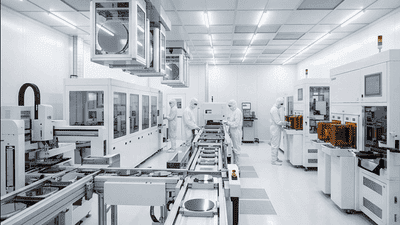
Acquiring an existing facility can reduce the need to create every part of the manufacturing environment from scratch. That can make it attractive relative to a wholly new site.
However, the cleanroom must still support the intended equipment and processes. Utilities, layout, contamination controls, and supporting infrastructure may need modification.
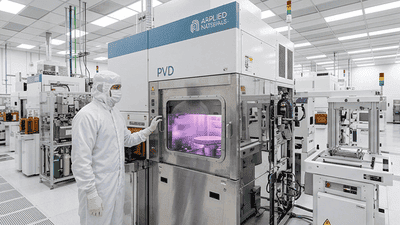
Micron said it had begun preparations after the January announcement and would start retrofitting the existing cleanroom following completion.
From a factory manager’s perspective, the advantage is a head start. It is not a shortcut around the engineering required to establish stable production. Available floor space becomes useful only when the complete manufacturing flow is ready.
The Second Facility Adds a Longer-Term Option

Alongside the purchase, Micron outlined a second facility of comparable scale at Tongluo, adding approximately 270,000 square feet of cleanroom space. The March announcement targeted construction beginning by the end of fiscal 2026. That was an announced schedule, not confirmation in itself that construction had subsequently started.
The two phases should remain separate in capacity models. Retrofitting the existing building and developing another facility involve different work and timelines.
The planned addition would bring the stated combined cleanroom area to approximately 570,000 square feet if completed as described.
That area cannot be converted directly into a precise wafer-output figure without knowing the equipment mix, process requirements, and production assumptions.
Cleanroom Area Is Not Production Capacity
A facility’s physical size establishes room for manufacturing activity. It does not reveal how much accepted memory it will produce.
Equipment layout, process complexity, utilization, cycle time, density, and yield all affect output.
Two facilities with similar cleanroom areas can therefore have different commercial capacities. Even one facility can change its bit output as technology and yields improve.
For investors, unverified wafer-per-month estimates should not be treated as company commitments. The more meaningful measure is qualified product output under a defined process and operating condition.
Leading-Edge DRAM Is the Direct Product Focus

Micron identified leading-edge DRAM, including HBM, as the purpose of the Tongluo expansion. The announcement did not provide a complete allocation between HBM, DDR5, and other DRAM products.
That limits how specifically the facility’s future contribution can be assigned.
DDR5 is relevant to Micron’s broader server-memory opportunity, but the acquisition alone does not establish a fixed quantity of DDR5 supply from Tongluo.
For an analyst, the right model leaves room for product-allocation updates. Manufacturing flexibility can be valuable, while assuming an undisclosed product split creates false precision.
HBM Requires More Than Wafer Production
High-bandwidth memory combines DRAM fabrication with demanding stacking, interconnection, testing, and integration work.
Additional front-end output therefore needs an adequate downstream path before it becomes finished HBM supply.
The Tongluo acquisition can support the manufacturing foundation, but it should not be described as automatically completing every stage of that chain.
For investors, this is a reason to examine fabrication and packaging together. A shortage at either stage can limit commercial shipments, even if the other stage has expanded successfully.
The PSMC Partnership Extends Beyond the Building
Micron’s January announcement also described a strategic manufacturing relationship with PSMC. It included DRAM post-wafer processing support and Micron assistance with PSMC’s niche DRAM process technology.
This relationship should not be conflated with the transfer of ownership at Tongluo. One concerns the acquired site; the other concerns continuing cooperation between two companies.
The distinction illustrates how memory capacity can be developed through several arrangements at once.
From an operations perspective, partnerships can help align different manufacturing stages. From a financial perspective, the scope and economics need to be understood separately from the purchase price of the property.
DDR5 Supply Depends on Configuration as Well as Bits
Server DDR5 demand is shaped by system shipments, populated slots, module capacity, and customer qualification. Aggregate DRAM output does not describe every required product.
A manufacturer can produce additional accepted dies while still working to deliver a particular qualified module configuration.
That means the Tongluo timeline needs to be connected to product readiness, not merely initial wafer activity.
For enterprise buyers, the relevant milestone is dependable access to approved memory. For investors, it is the point at which additional manufacturing output reaches customers at acceptable commercial terms.
NAND Is Not the Acquired Site’s Announced Mission
The Tongluo transaction was presented as a DRAM expansion. It should not be treated as a direct addition to Micron’s NAND wafer capacity.
NAND serves persistent-storage applications and uses a different manufacturing technology. Its production plans require separate analysis.
The connection is at the company and system level. Micron allocates capital across memory and storage businesses, while enterprise customers need both working memory and persistent capacity.
For a market forecast, this distinction prevents double counting. The acquisition can strengthen the broader company strategy without being assigned an unsupported quantity of new NAND output.
Enterprise Storage Shares the Infrastructure Demand
AI and enterprise workloads require databases, datasets, checkpoints, and operational information to remain available across sessions and power cycles. SSDs provide part of that persistent-storage layer.
DDR5 and HBM meet different working-memory requirements. Their growth can accompany enterprise-storage growth without implying an identical rate.
A server expansion can require both, but the configuration depends on software and workload.
For investors, Tongluo’s significance should therefore be connected to the broader infrastructure opportunity carefully. The facility directly supports DRAM; storage benefits or trade-offs arise through corporate investment and customer deployment decisions.
Yield Improvement Determines the Ramp’s Value
Initial production does not necessarily operate at the intended mature yield. Manufacturing teams need to establish repeatability and reduce losses across the process.
That affects both quantity and cost. More wafer activity can create less accepted output than a headline capacity estimate suggests.
Product grading also matters because customers need particular specifications, not simply functioning dies.
For analysts, a meaningful ramp assessment follows accepted output, production stability, and customer qualification. Those indicators reveal whether the acquired infrastructure is becoming an economically useful asset.
The Equipment Pipeline Is Part of the Critical Path
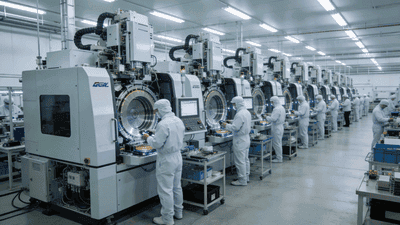
Retrofitting requires a coordinated set of process tools and supporting subsystems. Equipment needs to arrive, be installed, and operate within the intended flow.
A missing system can delay the complete line. Component constraints can also affect equipment delivery even when the supplier has sufficient final-assembly space.
Installation and field-engineering resources matter as several projects compete for attention.
For a factory manager, the timeline is therefore a linked schedule rather than one date. For an investor, procurement progress is useful evidence, but it should not be treated as equivalent to productive capacity.
Taiwan Provides an Established Operating Context
Micron already has a substantial manufacturing presence in Taiwan. Adding Tongluo allows the company to expand within a region where it has operating experience and an existing organization.
An October update from Micron Taiwan’s chairman described new production lines in Taoyuan and Tongluo as expected to begin operations during 2027–28. That broad window is consistent with a phased development discussion, but does not replace the more specific shipment milestone in the acquisition announcement.
Regional familiarity can support execution. It does not remove infrastructure, staffing, or production-development requirements.
For analysts, the benefit is potential coordination—not an assumption that proximity makes the ramp automatic.
The Financial Commitment Extends Beyond the Purchase
The acquisition price secured the site. Equipping, retrofitting, developing processes, and supporting production require additional spending.
The planned second facility introduces another investment phase.
That is why the transaction should be evaluated through total capital requirements and expected returns rather than the purchase price alone.
For investors, the attractive outcome combines useful capacity with competitive manufacturing costs and sustained demand. An acquired building becomes valuable when the products it enables earn enough to justify the full investment.
The Timing Matters for the Memory Cycle
Supply arriving during fiscal 2028 will enter a market that may differ from the one supporting the acquisition decision in early 2026.
Customer deployments, competitor output, technology transitions, and inventory can all change before the ramp becomes commercially significant.
That does not make the investment inappropriate. Semiconductor capacity decisions necessarily involve long lead times.
It does mean the forecast should test different conditions. A strong current shortage is not proof that every future unit will command the same pricing, while a later moderation does not eliminate the strategic value of a competitive manufacturing asset.
A Practical Timeline Dashboard
The most useful milestones keep physical and commercial progress separate.
- Confirm retrofitting and supporting infrastructure readiness.
- Track equipment installation and integrated process development.
- Distinguish initial wafer output from meaningful product shipments.
- Follow accepted yield and customer qualification.
- Monitor the product allocation between different DRAM applications.
- Evaluate the second facility separately from the acquired building.
- Compare total investment with cash generation and returns.
This framework makes the capacity timeline more informative than a single anticipated start date.
The Acquisition Creates an Option, the Ramp Creates Supply
Micron’s completed purchase of PSMC’s Tongluo P5 site is a meaningful step toward additional Taiwan DRAM capability. The transaction provides existing cleanroom infrastructure and a planned expansion path, with meaningful product shipments targeted for fiscal 2028.
It is not a takeover of PSMC, an immediate DDR5 supply increase, or an announced NAND-capacity addition.
The durable achievement will be converting the site into qualified, economical output. Ownership establishes the opportunity. Manufacturing execution determines when—and how much—of that opportunity reaches customers.