Lam Research’s Extended Lead Times: Etch and Deposition Equipment at 12 Months
A twelve-month wait for semiconductor equipment changes more than a purchasing schedule. It changes when a fab can add capacity, how customers reserve manufacturing resources, and how suppliers organize production. For etch and deposition systems, that delay can sit directly on the critical path between a technology roadmap and commercial output.

The headline needs a qualification. Industry reporting in August 2026 described conventional etch and thin-film deposition lead times stretching to approximately twelve months. Lam Research, however, had publicly acknowledged lengthening lead times without providing a company-wide numerical figure. The twelve-month benchmark should therefore be treated as an industry-reported indication, not a confirmed delivery schedule for every Lam system.
The deeper issue is synchronization: customers need equipment, facilities, materials, and qualified processes ready at the same time. Extended lead times make that coordination harder—and make early planning more valuable.
What a Twelve-Month Lead Time Actually Measures
Equipment lead time usually describes an interval between a defined commercial milestone and a delivery milestone. But those endpoints are not always consistent across quotations and market reports.
One estimate may begin with order acceptance and end at shipment. Another may describe delivery to the customer. Neither necessarily includes installation, process qualification, or readiness for production.
Configuration also matters. A standard platform and a customized system can have different schedules, even when both are categorized as etch or deposition equipment.
For a fab manager, the practical question is not simply when the machine arrives. It is when the machine can produce acceptable wafers. A purchasing plan built around an ambiguous lead-time number can underestimate the full path to capacity.
Why Etch and Deposition Are Under Pressure
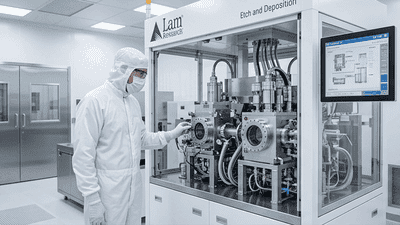
Semiconductor architectures increasingly depend on precise material formation and removal. Deposition creates films and structures; etching shapes them or selectively removes material.
As devices become more three-dimensional, the process requirements change. Complex geometries, different materials, and demanding control can increase the importance of particular equipment capabilities.
Lam has identified rising deposition and etch intensity across NAND, DRAM, logic, and advanced packaging. That provides a technical explanation for demand beyond simply processing more wafers.
However, higher process intensity does not establish a universal spending multiplier. Customers use different flows, and productivity improvements can change the number of systems required. The equipment opportunity needs to be evaluated application by application.
Strong Demand Can Stretch Schedules Before Revenue Arrives
Customers often place orders before their facilities are ready for installation. They are securing future capacity in the supplier’s manufacturing schedule.
When several customers accelerate investment simultaneously, equipment production can become more tightly allocated. Delivery windows extend even if the supplier is increasing output.
This creates a familiar financial pattern: orders improve before revenue fully reflects the increase. The supplier must complete manufacturing, testing, and the contractual steps required for revenue recognition.
For investors, longer lead times can therefore support visibility without guaranteeing immediate growth. They indicate pressure on available capacity, but the commercial benefit depends on whether orders remain firm and systems are delivered economically.
Lam’s Outlook Supports the Demand Signal
In its July 2026 earnings discussion, Lam raised its calendar-year wafer fab equipment outlook to the low $150 billion range from approximately $140 billion. Management also described lead times as challenging while discussing its manufacturing and supply-chain response.
This supports a stronger demand interpretation, but it does not isolate the cause of every delivery delay. Product mix, customer timing, and component availability can all influence schedules.
Nor should Lam’s industry outlook be confused with its own revenue forecast. A larger wafer fab equipment market creates opportunity, but each supplier participates according to its portfolio and qualified customer positions.
The useful connection is that stronger anticipated spending increases the importance of manufacturing execution. Demand must be converted into completed systems rather than remaining in the order book.
The Bottleneck Can Begin Below the Complete Tool
An etch or deposition platform depends on specialized subsystems. Vacuum equipment, power delivery, gas handling, controls, precision components, and chamber assemblies must arrive in the required configuration.
A missing item can prevent a nearly completed tool from finishing verification. The supplier may have assembly capacity and customer demand while still being unable to ship.
That is why final-system lead times do not always reveal the underlying constraint. A production schedule can be determined by one difficult component rather than the average availability of the entire bill of materials.
For equipment manufacturers, supply-chain expansion needs to be coordinated. Adding factory space is helpful only if upstream suppliers, testing resources, and skilled personnel can support the intended output.
Custom Configurations Complicate Capacity Planning

Equipment customers do not necessarily order identical machines. Chamber arrangements, process capabilities, interfaces, and supporting subsystems can vary with the application.
That variation affects procurement and manufacturing. A supplier can have available capacity for one configuration while another remains constrained.
It also limits the usefulness of a single headline lead time. The twelve-month benchmark may describe broad market conditions without capturing the schedule of a particular customer’s order.
For purchasing teams, the actionable information is configuration-specific: what has been selected, which items are critical, and when the supplier can complete the agreed system. General market estimates should inform planning, not replace direct confirmation.
NAND Creates a Technology-Intensity Opportunity
NAND manufacturing illustrates how equipment demand can grow through architectural change. More complex vertical structures can require demanding deposition and material-removal processes.
Lam’s July commentary described an expectation that its served available market per wafer in NAND would double between 128-layer and more-than-500-layer devices. That is a company-specific assessment of addressable process opportunity, not a prediction that every customer’s total equipment spending will double.
The distinction matters. Served market, actual purchases, installed tools, and revenue are separate measures.
For investors, the attractive feature is potential structural relevance. The timing still depends on customer transitions, capacity plans, qualification, and the productivity of the systems used.
Advanced Packaging Extends the Demand Beyond Conventional Front-End Boundaries
Advanced packaging can use wafer-processing capabilities in addition to traditional assembly equipment. Through-silicon-via processing, surface treatment, and selected interconnect operations create opportunities for suppliers with etch and deposition expertise.
Lam’s July discussion highlighted through-silicon-via etch and electroplating as part of its advanced packaging opportunity. Those applications should be distinguished from conventional bonding, molding, or final testing.
The back-end connection is therefore specific. A longer lead time for a packaging-related process tool can delay one stage of an integration flow, even if other assembly equipment is available.
For analysts, that reinforces the need to map the process. “Advanced packaging growth” is not enough to identify which tools are required or where the next bottleneck will emerge.
Facility Readiness Can Shift the Delivery Window
A customer may reserve equipment early because its manufacturing lead time is long. But the receiving facility has its own schedule for construction, utilities, cleanrooms, and staffing.
If those activities slip, the customer can become unable to receive or install a system on the original date. The resulting delay may reflect site readiness rather than equipment production.
Conversely, a completed facility can wait for one critical process tool. Both situations create idle capital and scheduling pressure.
From an operations perspective, the best response is continuous coordination. Delivery commitments should be connected to realistic installation milestones, not managed as an isolated purchasing exercise.
Installation and Qualification Add Another Clock
Shipping a machine does not establish productive capacity. Installation, verification, integration, and process qualification follow.
The time required depends on the application and the customer’s experience with the platform. A familiar expansion can differ from introducing a new process configuration.
Field-engineering availability also matters when several projects ramp simultaneously. Suppliers need enough experienced personnel to support new installations without weakening service for existing customers.
For a factory manager, the relevant schedule therefore includes both equipment manufacturing and deployment. Treating delivery as the completion date can produce an optimistic view of when output will become available.
Upgrades Can Relieve Pressure—but Not Replace Every New Tool
Customers facing long waits may investigate whether existing systems can deliver more capacity through upgrades, maintenance improvements, or better utilization.
That can be attractive when the installed platform remains technically suitable. Improving a bottleneck tool’s productivity may unlock output elsewhere in the line.
However, an upgrade cannot be assumed to provide the capabilities needed for every technology transition. Some applications require a different chamber, subsystem, or platform.
The right comparison is between usable outcomes. Customers need to evaluate the capacity gained, implementation cost, interruption required, and expected operating life. A faster workaround is valuable only when it supports the intended manufacturing requirement.
Used Equipment Offers a Selective Alternative
For established processes, a qualified refurbished system can provide another capacity route. Its suitability depends on condition, configuration, parts availability, and process compatibility.
Physical availability does not guarantee faster production readiness. Removal, transport, refurbishment, installation, and qualification can consume significant time.
The alternative is strongest when the customer already understands the platform and the required process is within its demonstrated capabilities.
For newer or more demanding applications, substitution may be less practical. A low acquisition price and short shipment schedule do not compensate for a tool that cannot deliver the required result.
Longer Lead Times Can Create Ordering Distortions
When customers become concerned about future availability, they may order earlier than they otherwise would. That improves the supplier’s forward visibility but can pull demand between periods.
It can also create a gap between equipment purchasing and near-term production needs. If project schedules change, orders may be deferred without the customer abandoning the underlying investment.
For investors, this is a reason to examine backlog quality and delivery timing rather than interpret every order increase as immediate end-demand acceleration.
The most informative evidence combines bookings with customer readiness, installation schedules, and repeated confirmation of production plans. Early purchasing is rational, but it can make the apparent cycle look stronger or weaker depending on the reporting period.
Margins Depend on Execution, Not Just Scarcity
Tight equipment availability can strengthen a supplier’s position, but it does not automatically improve profitability.
Expedited components, manufacturing expansion, additional testing, and field-support requirements can increase costs. Product mix and customer terms also influence the financial result.
A supplier can therefore experience strong revenue growth while facing pressure in parts of its operation. Conversely, better production efficiency can support margins even as capacity expands.
For investors, the correct framework follows revenue, operating performance, working capital, and cash generation together. Lead-time pressure is an industry signal, not a standalone earnings model.
What to Monitor Beyond the Twelve-Month Headline
A practical assessment should focus on the details that determine whether schedules improve or deteriorate.
- Confirm lead times for the specific platform and configuration.
- Distinguish order-to-shipment from delivery-to-production timing.
- Identify whether constraints arise from demand, components, testing, or site readiness.
- Track customer rescheduling separately from cancellations.
- Assess installation resources and continuing service obligations.
- Compare accepted output with announced manufacturing capacity.
These indicators make the discussion useful for procurement decisions and financial analysis. They also reduce the risk of turning a broad market estimate into an unsupported company-wide claim.
The Strategic Value of a Reliable Schedule
Reports of approximately twelve-month etch and deposition lead times capture a meaningful equipment-planning challenge. Lam’s acknowledgement of stretching schedules supports the direction of that concern, while its refusal to provide a universal numerical lead time limits how precisely the headline can be applied.
The opportunity spans front-end processes and selected advanced packaging applications. The risks span the same chain: components, manufacturing, facilities, installation, and qualification.
The competitive advantage belongs to suppliers and customers that coordinate those stages effectively. In a constrained equipment market, a dependable path to productive capacity can be as valuable as the tool itself.