Electronic Specialty Gas Demand from Advanced Nodes: The Localization Acceleration
Electronic Specialty Gas Demand from Advanced Nodes: The Localization Acceleration
Semiconductor manufacturing is often described through its most visible assets: lithography machines, cleanrooms, silicon wafers, and increasingly expensive fabrication plants. Yet some of the materials that determine whether those investments produce usable chips arrive through pipes and cylinders. Electronic specialty gases belong to this less visible but strategically important layer of the industry.
As device architectures become more complex, gas suppliers face a changing assignment. They must deliver precisely controlled chemistry, preserve purity throughout the supply chain, and support customers whose manufacturing processes leave little room for variation. At the same time, the geographic expansion of semiconductor production is encouraging suppliers to move more capabilities closer to their customers.
The result is an acceleration in localization. But the opportunity is more nuanced than building a filling station beside a new fab. The real challenge is creating regional supply systems that combine qualified molecules, dependable purification, analytical control, safe packaging, and responsive technical support.
Advanced Nodes Change What Gas Suppliers Must Deliver
More wafer production generally supports greater materials consumption. Advanced semiconductor manufacturing adds another dimension: the process applied to each wafer can become more demanding, changing both the gases required and the standards they must meet.
Deposition, etching, doping, surface treatment, and chamber cleaning involve different chemical functions. A technology transition can introduce new materials, alter process sequences, or require tighter control over an existing gas. Consequently, demand depends on the manufacturing recipe as well as the number of wafers entering the fab.
This is why node labels alone are poor forecasting tools. A smaller nominal node does not automatically translate into a fixed percentage increase in specialty-gas consumption. Some steps become more complex, while others are redesigned or performed more efficiently.
For suppliers, the strongest opportunities emerge where a gas solves a specific process problem. Volume matters, but a product that enables reliable manufacturing can be commercially valuable even when its physical consumption is relatively modest.
Bulk Gases and Specialty Gases Follow Different Economics
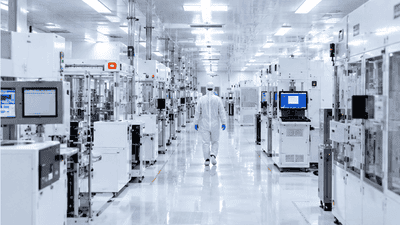
Before assessing localization, it is important to separate the bulk-gas backbone from process-specific specialty materials. Large-volume gases such as nitrogen, oxygen, and argon support many fab activities. Their supply may involve onsite production, pipelines, liquid storage, and backup arrangements.
Electronic specialty gases serve more targeted purposes. Their delivery can involve pure compounds, carefully prepared mixtures, specialized containers, and application-specific quality requirements. The relevant commercial questions extend beyond production capacity to formulation, purification, packaging, and qualification.
A major onsite industrial-gas project therefore does not prove that a region has established independent production of every specialty molecule its fabs require. Conversely, a relatively small purification or synthesis operation can address a meaningful vulnerability in a particular process material.
Both categories are essential, but they should not be combined indiscriminately in market estimates. Their investment requirements, logistics, and competitive advantages differ. Understanding that distinction makes the localization story considerably clearer.
Process Complexity Creates Selective Demand
From a process engineer’s perspective, a gas is not an isolated input. It operates within a system that includes equipment settings, surface conditions, pressure, temperature, and the sequence of manufacturing steps.
A chemically appropriate material may still fail commercially if its impurity profile varies or its delivery behavior is inconsistent. The customer needs repeatable results, not merely a molecule with the correct name.
That creates opportunities for suppliers to compete through purification, analytical capability, packaging quality, and process support. It also means that higher market value need not come entirely from higher tonnage.
For an investor, the implication is straightforward: exposure to advanced nodes should be examined product by product. A broad semiconductor customer base may be attractive, but the decisive question is whether the supplier provides materials that remain important as those customers change their manufacturing processes.
Memory Adds a Second Demand Path

Leading-edge logic attracts much of the attention, particularly when discussing AI accelerators. Memory manufacturing provides another important route to specialty-gas demand, with its own deposition, etching, cleaning, and other process requirements.
This broadens the opportunity, but also complicates interpretation. A supplier serving memory customers is not automatically exposed equally to every memory product or every investment cycle. Its prospects depend on the qualified gases it provides and the processes in which they are used.
Strong demand for AI-related memory can coexist with more uneven conditions in other applications. Customers may also redistribute production across products without increasing all material purchases proportionately.
The useful analytical unit is therefore the combination of customer, process, and molecule. General labels such as “AI beneficiary” or “memory exposure” provide a starting point, not a complete explanation of demand.
Purity Must Survive the Entire Journey
Gas purity is often summarized by a headline percentage. That is convenient, but it leaves important questions unanswered. The identity and concentration of particular impurities can matter more to a process than the total impurity level.
Quality also has to survive packaging, transport, storage, and delivery. Material that meets specification when manufactured must remain suitable when it reaches the tool. Cylinders, valves, handling procedures, and distribution systems all become part of that responsibility.
For a fab operator, consistency across repeated deliveries is more valuable than an exceptional result achieved only occasionally. For a supplier, this means quality control is not a final inspection step; it is an operating system.
A local supplier cannot establish credibility through a purity claim alone. It needs reliable measurements, traceability, controlled packaging, and evidence that its products perform consistently in the customer’s application.
Why Proximity Is Becoming More Valuable

Moving supply capabilities closer to semiconductor customers can improve responsiveness. Shorter routes may simplify replenishment, while nearby technical teams can investigate problems and coordinate corrective action more quickly.
Proximity also supports closer collaboration during manufacturing ramp-up. A new fab may need adjustments to delivery arrangements, inventory practices, or material specifications as production develops. Suppliers positioned to respond can become more deeply integrated into those operations.
There is a practical human dimension here. A production team facing an unexplained variation wants a knowledgeable partner who can examine the issue, retrieve relevant batch information, and coordinate testing—not simply promise another shipment.
However, distance is only one variable. A nearby facility without the required analytical capability or qualified product remains incomplete. Localization becomes strategically valuable when it strengthens the performance of the whole supply system.
Localization Has Several Layers
The word can describe very different investments, each addressing a different problem.
- Local storage provides accessible inventory but may leave manufacturing overseas.
- Local filling and blending improve packaging flexibility while potentially relying on imported inputs.
- Local purification creates application-ready material from sourced feedstock.
- Local synthesis establishes production of the molecule itself.
- Local laboratories and application teams support quality verification and customer troubleshooting.
These capabilities can develop separately or together. None should be assumed merely because another exists. A facility that fills imported gas is not equivalent to one that synthesizes and purifies it.
For policy makers and procurement teams, this distinction matters. Regional resilience should be assessed through the actual activities performed locally, not through the location of a warehouse or the nationality of a supplier.
Qualification Determines When Capacity Becomes Useful
Installed capacity is not the same as usable semiconductor supply. A new operation must demonstrate that its product meets the customer’s requirements and behaves consistently in the intended process.
Depending on the material and the change involved, qualification can include analytical review, packaging assessment, delivery compatibility, and manufacturing trials. The objective is to establish confidence before introducing a new source into regular production.
This creates a timing challenge. Customers want alternatives available before a disruption. Suppliers want sufficient demand visibility before committing capital. Both sides must invest effort before the commercial relationship reaches full scale.
The strongest localization programs address qualification early. They align specifications, testing, and production development with customer needs rather than treating approval as a final administrative exercise. A completed building is a milestone; dependable commercial deliveries are the more meaningful achievement.
Nearby Supply Is Not Necessarily Independent Supply
Two suppliers can operate in the same region while depending on the same upstream chemical source. Separate facilities can also share electricity infrastructure, transport routes, or specialized packaging providers.
That means proximity can improve service while leaving common vulnerabilities intact. A second vendor provides limited protection if the event disrupting the first vendor also prevents the alternative from operating.
For a procurement manager, redundancy requires understanding the failure being guarded against. International transport disruption, feedstock shortage, regional power failure, and a quality incident call for different safeguards.
A more resilient arrangement combines qualified alternatives, appropriate inventories, upstream visibility, and practical contingency plans. Localization is an important tool, but it cannot replace analysis of the dependencies that remain outside the local facility.
The Business Case Extends Beyond Gas Volume
Specialty-gas economics include more than the cost of making a molecule. Purification, testing, container preparation, logistics, safety systems, customer support, and qualification all contribute to the delivered cost.
Regional duplication can increase expenses, especially while a new operation serves a limited customer base. A facility may be technically ready but commercially underutilized if customer production ramps more slowly than expected.
From the supplier’s perspective, customer commitments and realistic demand planning are therefore essential. From the customer’s perspective, the lowest purchase price may not represent the lowest overall manufacturing risk.
The most attractive localization projects balance these interests. They provide a meaningful improvement in supply capability while maintaining sufficient utilization and commercial discipline. Strategic importance alone does not guarantee attractive returns.
Efficiency and Environmental Requirements Reshape Consumption
A demand forecast should account for how effectively gases are used, not simply how much manufacturing capacity is installed. Process redesign, improved utilization, recovery, substitution, and treatment can change consumption and operating costs.
This creates a more complex growth picture. A supplier may gain importance by helping a customer achieve the same manufacturing outcome with less material. Lower consumption per wafer can coexist with stronger commercial value if the solution improves performance.
Localization also should not automatically be described as environmentally superior. Shorter transport distances are relevant, but production energy, feedstock sourcing, process efficiency, and treatment requirements also influence the overall outcome.
The better question is whether a regional supply system improves both reliability and resource efficiency. That requires examining the complete operating model rather than assuming that geography alone determines its benefits.
Reading the Opportunity Across Semiconductor Materials
Electronic specialty gases share several characteristics with wafers, photoresists, and sputtering targets. All are qualified inputs whose commercial importance depends on consistency, contamination control, and compatibility with manufacturing processes.
Their demand patterns nevertheless differ. Wafers provide the substrate. Photoresists support patterning. Targets supply materials for particular deposition steps. Gases participate across a wider range of chemical and processing functions.
Consequently, the same increase in wafer production can produce different growth rates across materials categories. Process mix and technical requirements determine how much each supplier benefits.
For analysts, this is an argument for detailed exposure mapping. The most useful forecasts connect materials to specific manufacturing activities instead of applying one semiconductor growth rate to every supplier.
From Local Capacity to Trusted Supply
The indicators worth watching are concrete: which molecules are produced locally, whether purification is available, how qualification progresses, and whether customers move from trial purchases to repeat deliveries. Upstream independence and facility utilization deserve equal attention.
Advanced manufacturing is raising the importance of specialty-gas performance, while regional fab development is creating incentives to locate supporting capabilities closer to customers. Together, these forces create a substantial opportunity—but a selective one.
The companies best positioned to benefit will convert proximity into dependable process support and installed capacity into qualified output. In electronic specialty gases, localization is not simply about shortening the journey. It is about ensuring that the right material arrives ready to do its job.