Vacuum Pump and RF Generator Shortages: The Equipment Sub-Component Bottleneck
A semiconductor production tool can be almost finished and still be commercially useless. The chamber is assembled, the automation works, and the customer has prepared an installation slot. Yet one missing vacuum pump or radio-frequency power subsystem can prevent the equipment from completing its final tests and leaving the factory.
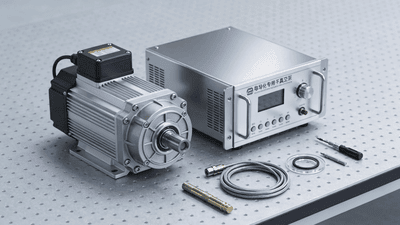
That is the uncomfortable logic of semiconductor equipment manufacturing: the smallest share of a tool’s purchase price can hold up the entire shipment. Investment discussions tend to focus on lithography, deposition, etching, and advanced packaging platforms. Beneath those platforms sits a network of specialized suppliers whose delivery performance determines how quickly orders become productive capacity.
Vacuum pumps and RF generators illustrate this dependency especially well. Both are tightly connected to process performance, and neither can always be replaced by an available product with similar headline specifications. The central issue is interchangeability—or, more accurately, its limits.
What the Shortage Narrative Does—and Does Not—Mean
There is no need to assume that every vacuum pump and RF generator is currently unavailable to understand the risk. Semiconductor subsystems experience changing demand, inventory corrections, and supply constraints. Tightness can affect particular models, configurations, or production schedules while other products remain readily available.
The relevant question is therefore not simply whether “pumps are in shortage.” It is whether an equipment manufacturer can obtain the exact qualified subsystem required for a specific tool, in the quantity needed, by the promised date.
A warehouse full of unsuitable products does not solve that problem. Nor does additional general-purpose manufacturing capacity necessarily eliminate a bottleneck in an application-specific configuration.
This distinction matters for market analysis. Broad shortage claims can exaggerate conditions, while aggregate inventory figures can conceal genuine constraints. The most useful evidence connects a particular component to an affected equipment platform and delivery schedule.
Why Vacuum Pumps Are Process Components
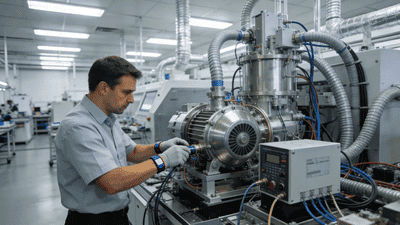
Vacuum systems establish and maintain the pressure conditions required by many semiconductor processes. Their role extends beyond simply removing air from a chamber. Pump selection must account for the process environment, cleanliness requirements, gas load, and interaction with the wider vacuum system.
Different applications use different pumping technologies. Semiconductor vacuum portfolios include turbomolecular pumps, dry pumping systems, contamination-management equipment, and valves. Their suitability depends on the process rather than a single universal measure of pumping capacity.
A process engineer consequently evaluates more than the nominal flow rating. Pressure behavior, compatibility with the intended chemistry, maintenance requirements, vibration, and operating stability can all influence whether a pump is appropriate.
For the equipment manufacturer, the pump becomes part of a qualified operating configuration. Replacing it may require more work than changing a mechanical fitting. The replacement must preserve the conditions on which the process and tool performance depend.
RF Generators Must Control a Changing Plasma Load
RF generators supply energy for plasma-based processes. However, successful operation involves more than producing power at a specified frequency. The system must deliver that power consistently as process conditions change.
Matching networks form an important part of this arrangement, adjusting the electrical relationship between the generator and the plasma load. Suppliers offer different combinations of frequency, power, tuning behavior, and control interfaces because applications vary.
Advanced plasma processing can demand rapid response, pulsing, and coordination between the generator and matching network. That makes compatibility and control behavior especially important when evaluating substitutes.
From a purchasing perspective, two products may look similar because they have the same rated power. From a process perspective, their behavior may differ enough to affect repeatability. This is why RF delivery should be treated as a subsystem, not merely as a power supply purchased independently of the chamber.
The Missing Part Can Block the Whole Tool

Equipment manufacturers coordinate hundreds of purchasing and assembly decisions around a delivery plan. Most components arriving on time is not sufficient if one essential item remains unavailable.
A missing pump can prevent vacuum testing. An unavailable RF generator or matching network can delay plasma-related verification. Without those steps, the manufacturer may be unable to demonstrate that the completed tool meets the required performance.
The resulting problem is larger than the cost of the missing component. Partially completed equipment occupies factory space, holds working capital, and complicates production scheduling. Customer installation teams may also need to revise their plans.
For a factory manager, the immediate priority becomes completing blocked systems rather than maximizing the number of assemblies started. This can create a gap between apparent manufacturing activity and actual shipment output.
Shortages Can Begin Further Upstream
A subsystem supplier has its own bill of materials. Vacuum equipment depends on mechanical parts, motors, controls, and other specialized inputs. RF systems depend on power electronics, cooling arrangements, measurement capabilities, and matching-network components.
That creates another layer of dependency. Expanding final assembly may not increase deliveries if an upstream item remains constrained. The supplier can have available workers and floor space while still lacking the parts required to complete production.
Customization adds complexity. A common component may be available, but the version needed for a qualified configuration may require different materials, interfaces, or testing.
For analysts, this means capacity announcements need careful interpretation. The important question is whether the complete production chain can support additional output. A larger assembly facility is useful only when upstream supply, testing, and engineering resources expand with it.
Advanced Processes Make Substitution More Difficult
As manufacturing requirements become more demanding, tool performance depends increasingly on the coordination of multiple subsystems. Vacuum behavior, gas delivery, pressure control, and plasma power do not operate in isolation.
Small differences can matter when a process is being optimized for repeatability and tightly controlled results. A replacement that performs adequately in a general application may not behave as required in a specific production recipe.
This does not mean alternatives cannot be developed. It means the development work should occur before a supply interruption forces a decision.
From the supplier’s perspective, that can create durable customer relationships. From the equipment maker’s perspective, it creates a reason to invest in qualification and design flexibility. From the fab’s perspective, it increases the value of understanding which subsystems support its critical tools.
Back-End Exposure Is Selective, but Real
Vacuum and RF dependence is most obvious in front-end processing, but selected back-end and advanced packaging activities also use vacuum processing, plasma treatment, and related systems.
The exposure is not uniform. Conventional assembly operations, advanced packaging process steps, and wafer-level manufacturing can require very different equipment. It would be misleading to describe every back-end tool as dependent on the same pump and power architecture.
Nevertheless, an interruption in a critical packaging process can constrain finished-device output even when wafer fabrication is progressing normally. Manufacturing capacity must remain balanced across the chain.
This is particularly important when assessing expansion plans. Additional front-end capacity does not automatically become additional saleable product if packaging or testing capacity is incomplete. Subcomponent risk should therefore be mapped by process step, not just by the front-end or back-end label.
Replacement Demand Competes with New Equipment Demand
Subsystem manufacturers serve more than new-tool production. Installed equipment also needs maintenance, repairs, spare units, and replacement parts.
During a period of strong expansion, these demands can overlap. Equipment manufacturers want components for new shipments, while operating fabs need support to preserve production uptime.
Allocation becomes a commercial and operational challenge. A delayed new tool affects future capacity. A delayed replacement can affect capacity already producing revenue. Both customers may regard their requirement as urgent.
For subsystem suppliers, a growing installed base can support recurring business, but it also increases service obligations. Capacity planning must account for those obligations rather than treating all output as available for new equipment orders.
Inventory Helps Only When It Matches the Requirement
Holding additional inventory is an intuitive response to uncertain lead times. It can be effective, but the usefulness of the buffer depends on what is stocked.
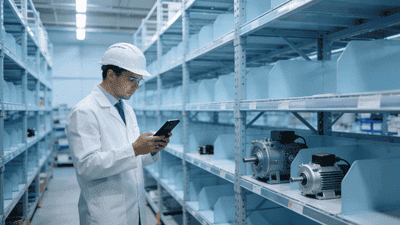
A spare unit needs the right configuration, interfaces, and compatibility for the intended application. Otherwise, it may provide little immediate protection despite appearing as available inventory.
Excess stock also carries costs. Capital is tied up, storage and handling must be managed, and changing equipment designs can reduce future usefulness. Ordering aggressively can create a later inventory correction if demand slows.
A disciplined policy distinguishes critical, long-lead items from broadly available parts. It connects buffers to realistic failure scenarios and expected consumption instead of applying the same stocking rule across the entire bill of materials.
Dual Sourcing Requires Engineering, Not Just Procurement
A second supplier is valuable only if its product can be used when needed. Obtaining another quotation does not establish a functional alternative.
Qualification may involve mechanical integration, control-system compatibility, safety review, performance testing, and process evaluation. The scope depends on the subsystem and the nature of the proposed change.
Equipment makers can improve resilience by considering alternative configurations during platform development. Standardized interfaces may help, although they do not eliminate the need to verify process behavior.
The commercial trade-off is clear: qualification requires time and resources before a disruption occurs. Yet postponing it can leave a manufacturer with few options precisely when delivery pressure is greatest. Supply resilience is therefore partly an engineering investment.
Localization Is Helpful, but Incomplete
Regional production and service capability can improve responsiveness. Nearby repair teams, spare-part inventories, and technical support can reduce some delays and simplify coordination.
However, a local assembly operation may still depend on imported critical parts. Two regional suppliers may also share an upstream source or common infrastructure.
Localization should consequently be evaluated by capability. Local repair, local testing, local component manufacturing, and local final assembly solve different problems. None should be assumed merely because a supplier has a regional address.
The strongest arrangements combine proximity with qualified output and visibility into upstream dependencies. Moving the final production step closer to the customer can be useful without making the supply chain fully independent.
How the Bottleneck Appears in Financial Results
Component constraints can create an unusual financial picture: strong orders, substantial backlog, and disappointing near-term shipments. The demand may exist, but the manufacturer cannot yet complete enough systems.
Working capital can increase as unfinished tools and purchased components accumulate. Expedited transport, schedule changes, and additional engineering work can also affect costs.
For investors, this is a reason to separate demand risk from execution risk. A shipment shortfall caused by missing subsystems is not identical to a customer cancelling a project. Both affect revenue, but they imply different future outcomes.
Subsystem suppliers also need scrutiny. Scarcity can strengthen their position, but expansion spending, upstream constraints, and customer concentration can limit the financial benefit. Strategic importance does not automatically produce superior profitability.
What to Watch Before Calling a Shortage
A credible assessment should connect delivery conditions with specific products and operating consequences.
- Track lead times for qualified models rather than broad component categories.
- Identify whether constraints originate in final assembly, upstream inputs, or testing.
- Examine unfinished equipment and shipment delays alongside backlog growth.
- Distinguish new-tool demand from service and replacement requirements.
- Look for evidence that alternative suppliers are qualified, not merely available.
- Assess whether capacity expansion is increasing completed output.
These indicators help separate temporary scheduling friction from a structural bottleneck. They also prevent a strong semiconductor spending outlook from being mistaken for guaranteed equipment revenue.
The Critical Component Is the One That Cannot Be Replaced
Vacuum pumps and RF generators demonstrate why semiconductor manufacturing capacity depends on more than major tool orders. Productive equipment requires a complete, compatible, and qualified collection of subsystems.
The most effective response is not indiscriminate stockpiling. It is earlier qualification, realistic capacity planning, targeted inventory, and better coordination between equipment makers and specialist suppliers.
In the next expansion cycle, competitive advantage may belong to the manufacturer that completes its tools reliably—not the one that starts the most assemblies. A subcomponent bottleneck becomes strategically important at the exact moment it prevents everything around it from working.