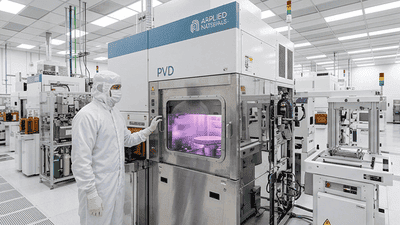
Advanced Packaging Material Demand: Underfill and TIM Localization
A large AI package can contain exceptional silicon and still fail because a relatively inexpensive material does not behave as expected. An underfill that leaves voids can compromise interconnect reliability. A thermal interface material that loses contact can turn an acceptable cooling design into a temperature problem.

That makes underfill and thermal interface materials, or TIMs, increasingly important within the semiconductor materials chain. They sit downstream from wafers, photoresists, process gases, and deposition targets, but their performance influences whether the value created upstream survives integration.
Localization adds another dimension. Customers want dependable supply, responsive technical support, and alternatives to concentrated sourcing. Local suppliers see an opportunity to enter higher-value applications. Yet proximity alone does not qualify a material. The commercial milestone is repeatable performance inside a customer’s manufacturing process and finished package.
Two Materials, Two Different Jobs
Underfill supports and protects interconnect regions. It helps manage the mechanical effects of materials expanding differently during temperature changes and can reinforce delicate connections.
TIM improves heat transfer across an interface, such as between a die and a lid or between a package and a cooling structure. It fills imperfections that would otherwise leave poorly conducting gaps.
The distinction matters because “advanced packaging polymer” is too broad a category for technical or investment analysis. Underfill is not simply a cooling adhesive, and a high-conductivity TIM is not necessarily suitable for reinforcing microbumps.
Some materials perform overlapping functions, but their intended location and qualification requirements must remain explicit. Customers purchase an application-specific solution, not a favorable collection of isolated datasheet values.
Why Demand Is Becoming More Demanding

CoWoS-related integration, chiplet architectures, and 3DIC can combine more components within structures that are larger, thinner, or more densely connected.
Fine interconnects reduce tolerance for filling defects. Large assemblies complicate mechanical control. Concentrated heat generation raises the importance of interfaces between devices and cooling structures.
However, more advanced packaging does not imply identical material growth everywhere. Some architectures use capillary underfill, others use films or molded approaches, and direct bonding changes the requirements at particular interfaces.
Demand analysis should therefore track package architecture, material location, and consumption per unit. Counting every AI package as the same underfill-and-TIM opportunity obscures the actual manufacturing flow.
Underfill Localization Begins With Flow
A capillary underfill must enter the intended gap and reach the required regions before its processing window closes. Large die footprints and fine-pitch connections make that task more difficult.
Viscosity changes with temperature and time. Filler size and distribution affect access to narrow passages, while wetting influences how the material interacts with surfaces.
A formulation that flows well on a simple coupon may leave voids in a dense production layout. Dispense location, temperature, geometry, and curing conditions all matter.
The local supplier’s challenge is consequently not to reproduce one viscosity number. It is to establish a stable combination of formulation and process behavior on the customer’s actual assembly.
Mechanical Properties Need Balance

Underfill must provide support without creating unacceptable stress. Thermal expansion, modulus, cure shrinkage, and adhesion interact within the package.
Lower expansion is not automatically better if other properties move in an unfavorable direction. Greater stiffness can improve support in one situation while transferring stress to a vulnerable interface in another.
Advanced packaging material guidance emphasizes balancing flow, adhesion, expansion, glass transition, and modulus rather than maximizing one property independently. That is particularly important for large, narrow-gap assemblies.
The materials engineer therefore evaluates the cured formulation in a representative structure. The purchasing team should require evidence of that performance rather than assume numerical similarity establishes interchangeability.
Different Underfill Flows Create Different Entry Barriers
Capillary underfill is typically introduced after the relevant joints are formed. Non-conductive films or pastes can participate during bonding. Molded underfill combines filling and encapsulation functions in a qualified process.
These approaches impose different requirements for material preparation, placement, flow, cure, and interaction with interconnect formation.
A supplier qualified in one category cannot automatically transfer that approval to another. Even within a category, die spacing, surface finishes, and thermal conditions can change the result.
Localization therefore proceeds application by application. Broad claims of “HBM-grade” or “chiplet-grade” material need a defined product and process behind them.
TIM Performance Is Not Just Thermal Conductivity
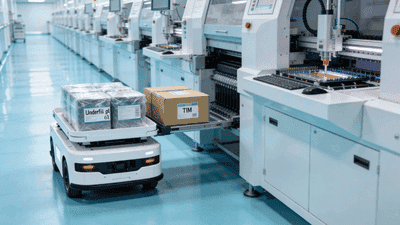
Thermal conductivity describes how readily a material conducts heat through its bulk. The complete interface also depends on thickness, contact quality, pressure, surface condition, and coverage.
A high-conductivity material applied too thickly or with poor contact can perform worse than a less impressive formulation integrated correctly.
Technical guidance on TIMs emphasizes that contact resistance becomes especially important when bond lines are thin or bulk conductivity is high. Improving the material’s headline conductivity does not remove interface losses.
The correct commercialization metric is effective thermal performance in the assembled structure, including its behavior over time.
Bond-Line Control Is a Manufacturing Requirement
The bond line is the thickness of material between the joined surfaces. It affects thermal resistance, mechanical behavior, and the ability to accommodate variation.
Reducing thickness can improve heat transfer, but the process must still cover the interface and avoid damaging delicate components. Surface flatness, assembly pressure, and material rheology influence the result.
Dispensing, printing, film placement, or another application method must produce repeatable coverage. A material demonstration does not establish production capability if application varies widely.
For local suppliers, technical support around the assembly process can be as important as formulation development. The product and its method of use need qualification together.
Reliability Separates Initial Success From Commercial Success
A TIM can perform well immediately after assembly and deteriorate during use. Movement, temperature cycling, and changes in the material can affect contact.
For some grease-based formulations, pump-out can move material away from the intended interface during repeated operation. Other products face different concerns involving adhesion, cracking, separation, or changes in mechanical response.
Underfills have their own reliability challenges, including interface degradation and stress-related damage. Moisture and contamination can complicate both material families.
The customer needs a defined reliability program matched to the application. Passing one initial thermal or mechanical test is not sufficient evidence of long-term suitability.
What Localization Actually Means
Localization can refer to domestic formulation, domestic manufacturing, local technical support, or ownership of the underlying material technology. Those are different achievements.
A locally formulated product may still depend on imported resins, fillers, additives, or processing equipment. A multinational supplier’s local factory may provide short lead times while retaining globally sourced inputs.
Neither model is automatically inadequate. The important question is which dependency the customer intends to reduce.
The word to remember is qualification. Local content becomes commercially valuable when the supply chain can deliver a qualified product consistently, not merely when the final container carries a domestic manufacturer’s name.
Proximity Can Improve the Development Cycle
Local suppliers can benefit from faster sample delivery, easier communication, and engineers who can visit the customer’s production line.
Those advantages are especially useful when process problems require repeated formulation changes or adjustments to dispensing and curing.
But proximity does not overcome weak materials control or incomplete reliability evidence. A customer cannot accept a less dependable product simply because technical support is nearby.
The strongest localization proposition combines responsive service with reproducible manufacturing, traceability, and a disciplined change-control system. Speed becomes valuable when it helps solve the right problem without introducing new variation.
Purity and Consistency Link Packaging to Front-End Materials
Semiconductor materials suppliers are familiar with the importance of contamination control. Packaging formulations face their own purity, particle, moisture, and consistency requirements.
The permissible conditions differ from those used for wafers, photoresists, gases, or targets. Nevertheless, the commercial principle is similar: customers need control over what enters the process.
Raw-material variation can alter flow, cure, adhesion, or thermal behavior. Shelf life, storage temperature, transport, and preparation can also influence performance.
Localization must therefore extend beyond a successful formulation batch. It needs specifications, incoming controls, manufacturing records, and dependable handling throughout delivery.
Customers Qualify the Combination, Not the Catalogue
A material is used against particular surfaces, with particular equipment, inside a particular structure. Changes in any of those conditions can affect acceptance.
A practical qualification sequence may begin with material screening, move into representative test vehicles, and then evaluate production lots and reliability.
Customer approval is consequently specific. Success with one package does not establish suitability for every design made by the same company.
For investors, this explains why qualification announcements need context. Identify the application, manufacturing stage, and commercial status before translating technical progress into revenue expectations.
Second Sourcing Requires More Than a Similar Recipe
Customers may seek an alternative supplier to improve resilience, pricing flexibility, or access to capacity. But replacing an underfill or TIM can require process adjustments and renewed validation.
Two materials with similar properties can behave differently during flow, curing, attachment, or environmental exposure.
Second sourcing therefore has an engineering cost. Customers must decide whether the flexibility gained justifies the qualification effort and whether both materials can be used within practical production controls.
A local supplier’s opportunity can begin with a limited application or designated backup role. Progress toward a broader production position depends on consistency and demonstrated usefulness.
Hybrid Bonding Changes the Demand Map
Direct bonding can replace conventional structures at certain die-to-die interfaces. It may change the amount or role of supporting polymers in those locations.
That does not make the complete package free of underfill, encapsulation, or thermal-interface requirements. Materials can remain necessary around stacks, beneath other components, or along the heat-removal path.
The demand mix may consequently shift toward different formulations rather than disappear.
Forecasts should follow the architecture. A transition from microbumps to hybrid bonding is not sufficient by itself to determine the total consumption of either underfill or TIM.
The Financial Opportunity Is Application-Specific
A small material expense can have considerable economic importance when it protects expensive dies or enables sustained system performance.
That can support premium products and durable customer relationships. It does not guarantee high margins for every supplier. Development, technical support, quality systems, and qualification consume resources.
Customers also evaluate total cost, including application time, curing, inspection, yield losses, and rework. A cheaper material can become expensive if it reduces accepted output.
The strongest investment case connects qualified demand with repeat orders, manageable manufacturing costs, and cash conversion. Revenue growth without process consistency is fragile.
A Dashboard for Localization Progress
Useful indicators include:
- The precise package interface and material function.
- Qualified formulations rather than broad product labels.
- Flow, adhesion, thermal performance, and reliability under representative conditions.
- Lot-to-lot consistency and raw-material traceability.
- Actual repeat production orders.
- Customer concentration and the status of second-source approval.
- Domestic production capacity and remaining imported dependencies.
- Margins, support costs, and cash collection.
Keep sample supply, customer evaluation, qualification, and volume deployment separate. Each marks progress, but none automatically proves the next.
Localization Succeeds When It Reduces Risk
Underfill and TIM demand is becoming more technically demanding because heterogeneous packages need reliable mechanical support and effective heat transfer. Larger assemblies and finer interfaces make material behavior harder to ignore.
Localization can improve responsiveness and diversify supply, but its strongest contribution is dependable production capability. The customer needs confidence that the material will behave predictably inside a valuable system.
The durable winners will deliver that confidence through formulation expertise, process support, quality control, and repeated qualification. In advanced packaging, local origin opens a commercial conversation. Reliable performance keeps the supplier in it.